
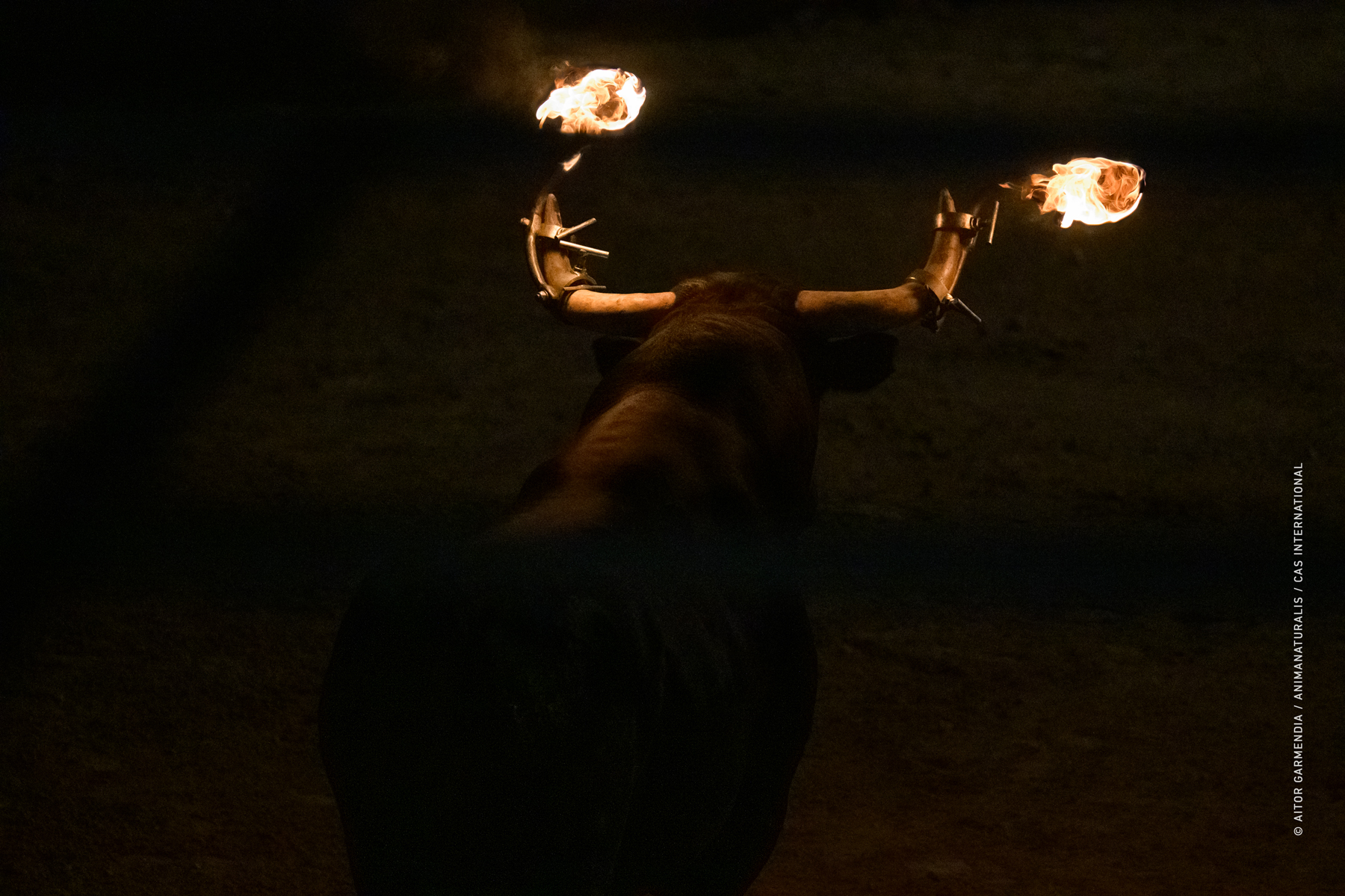
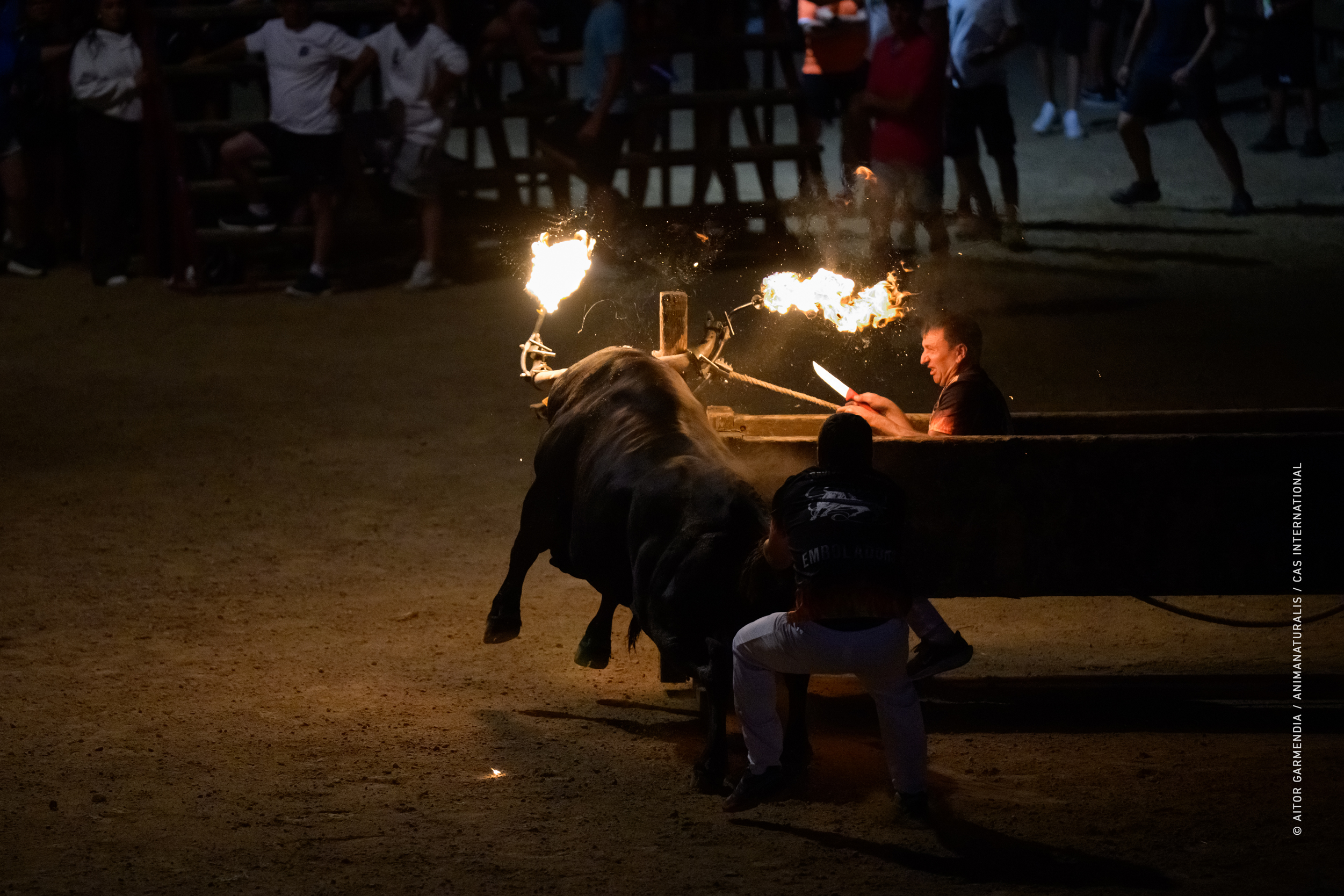
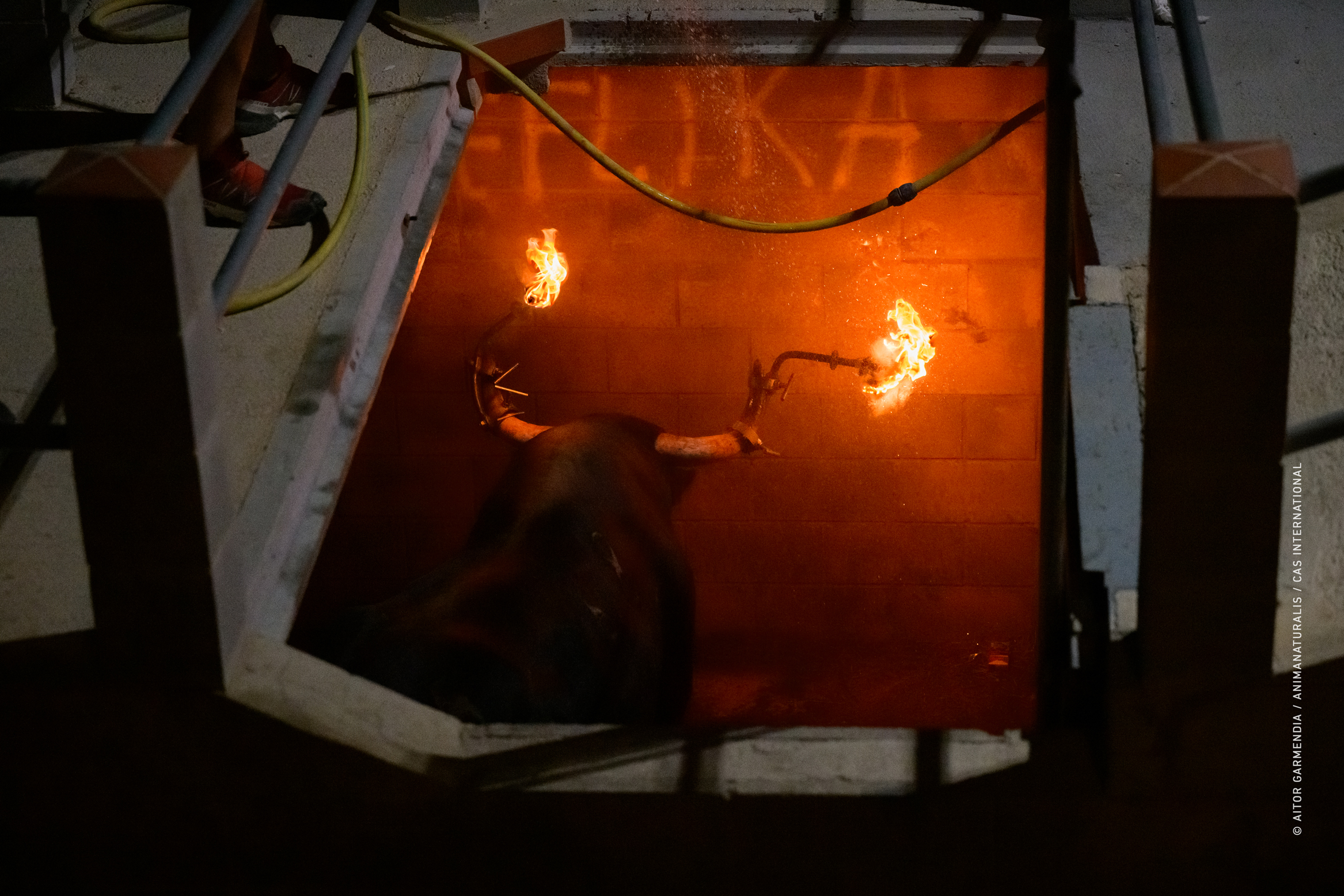
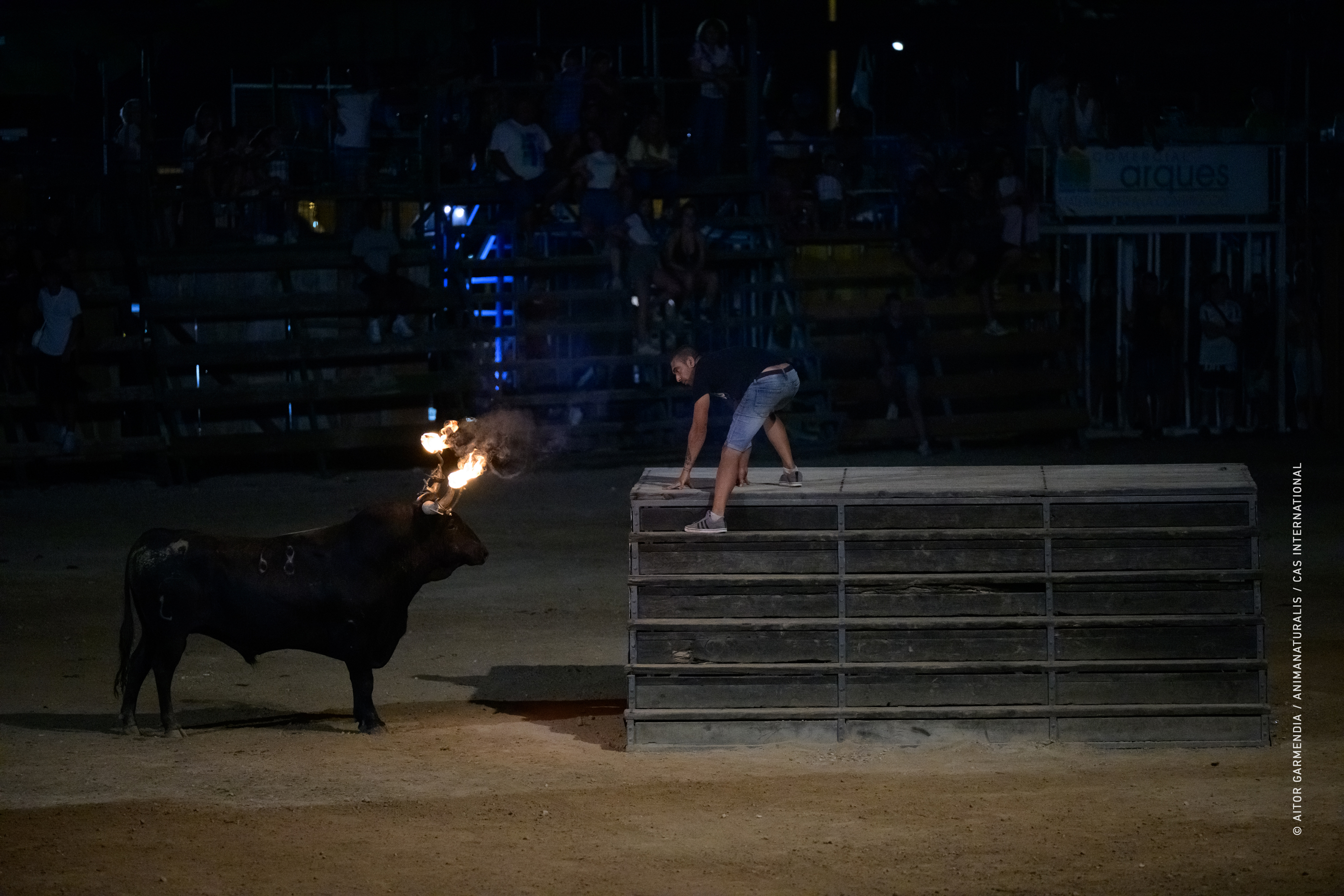
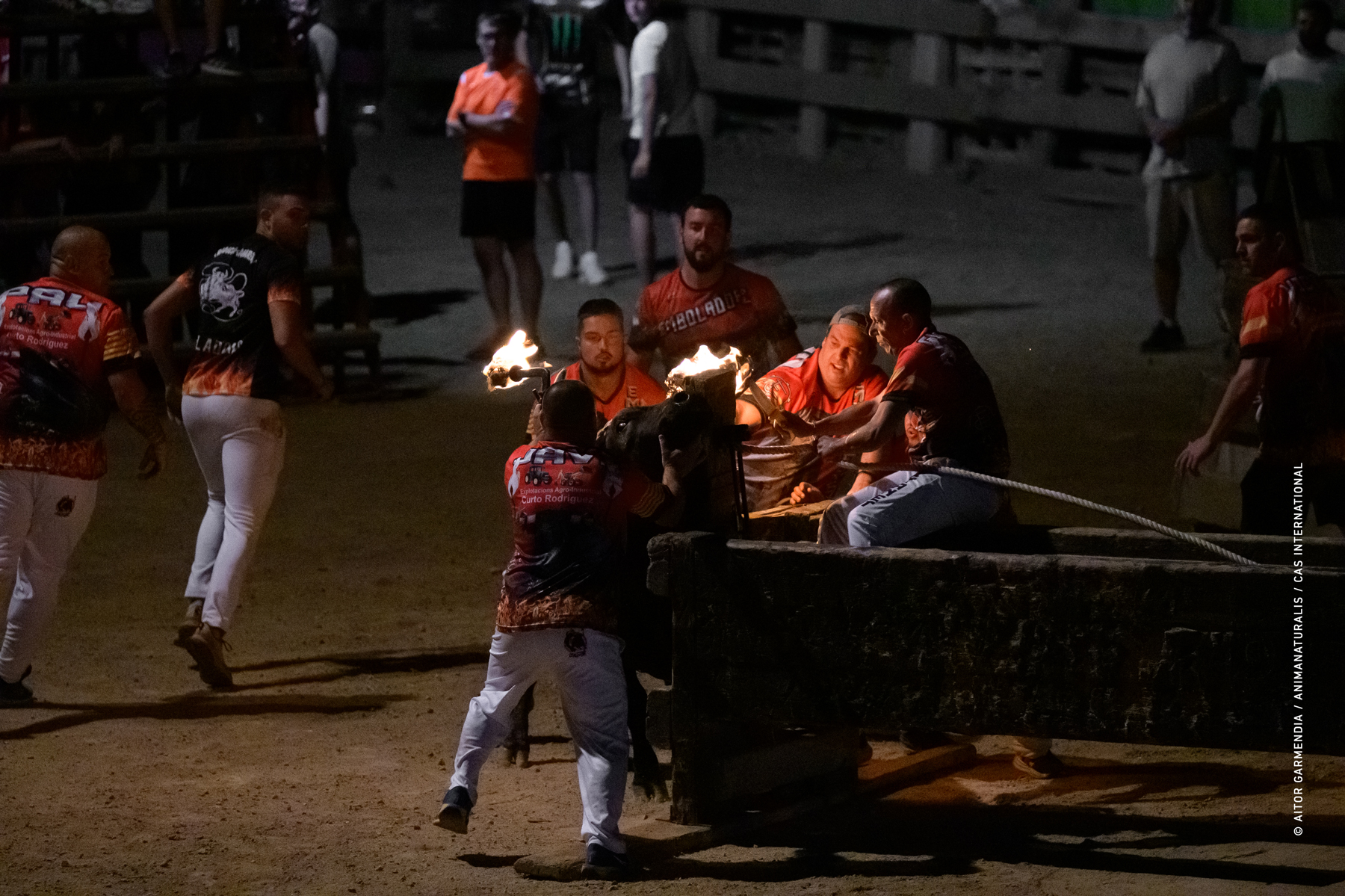
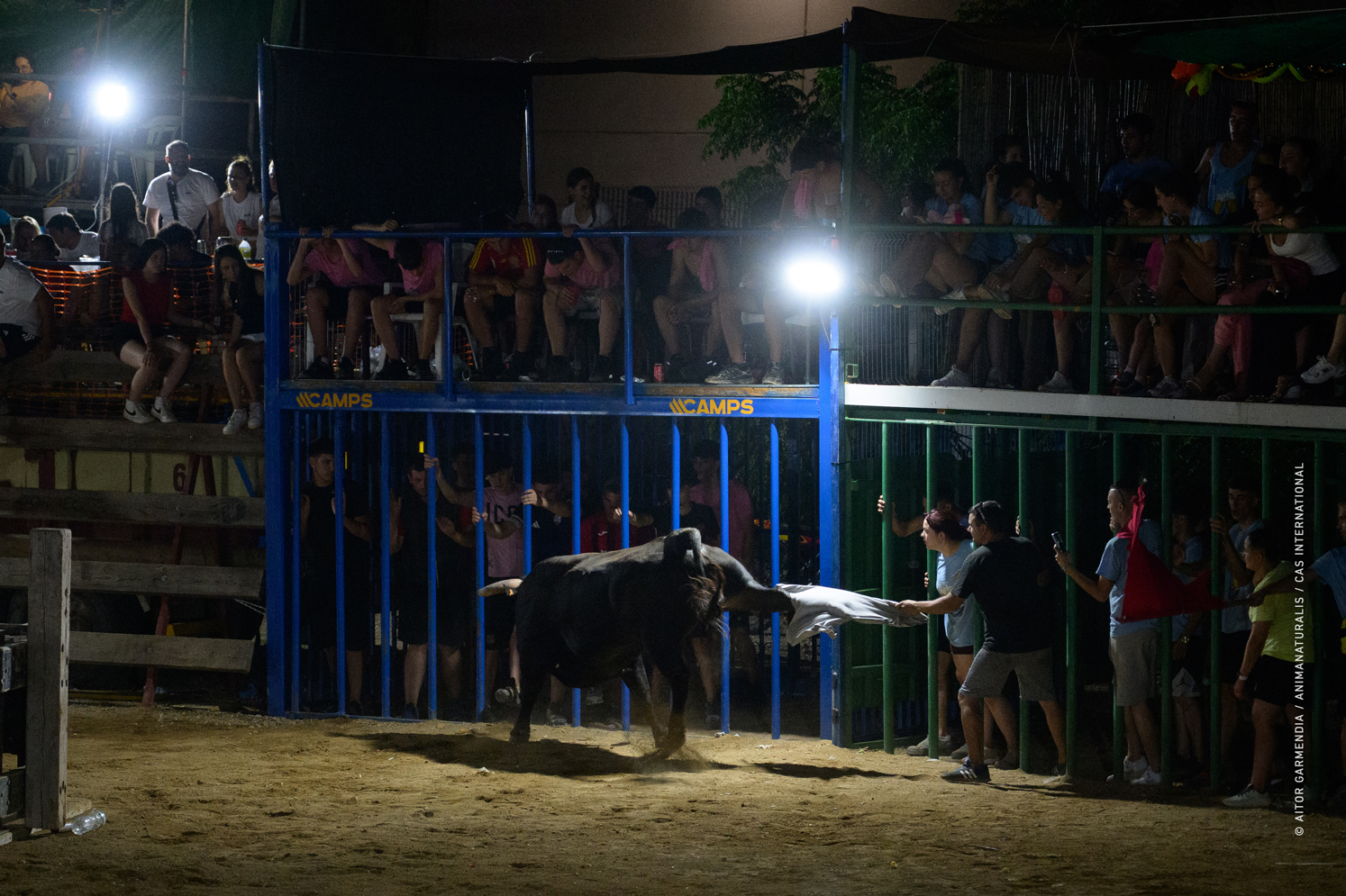
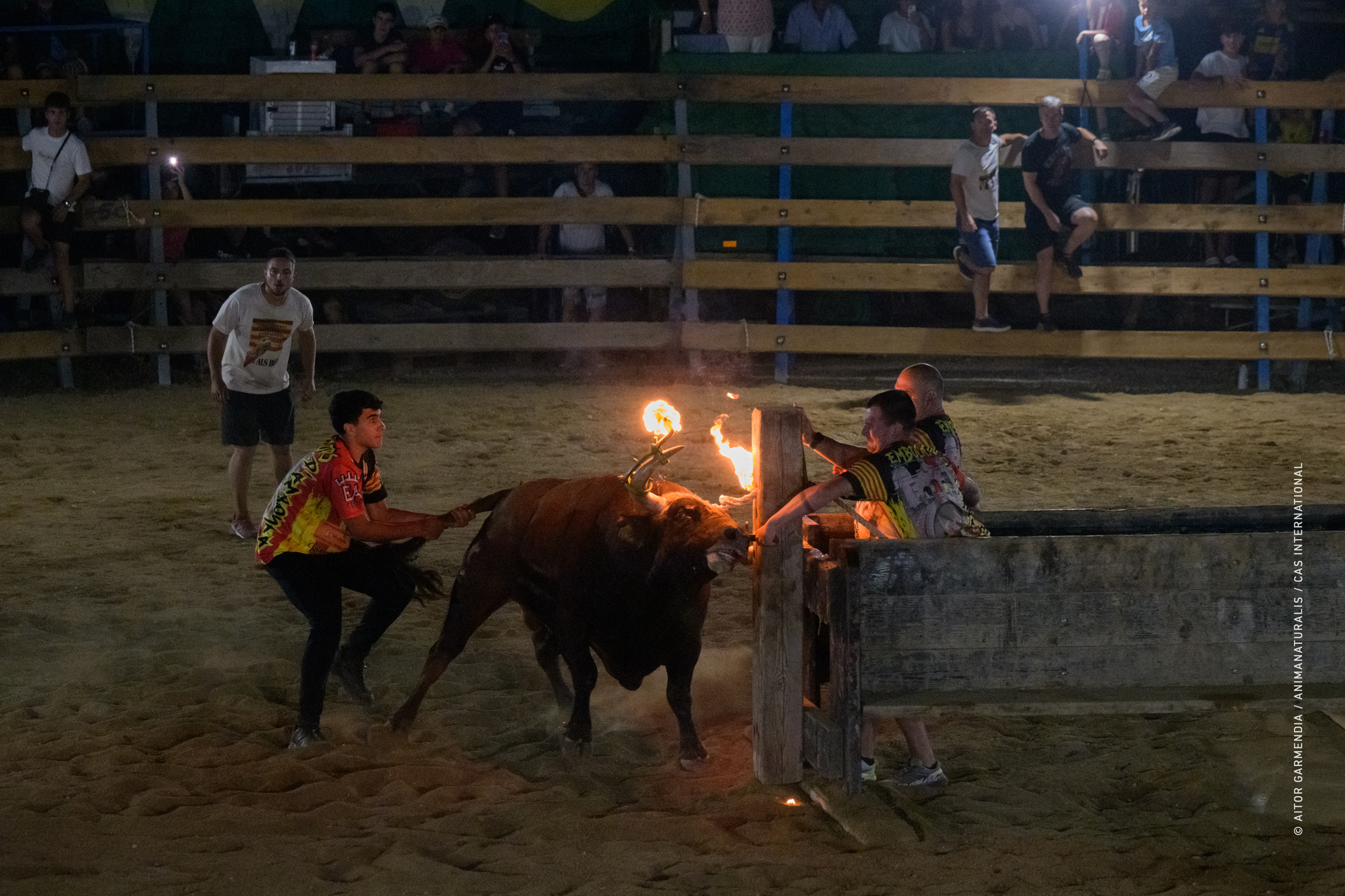
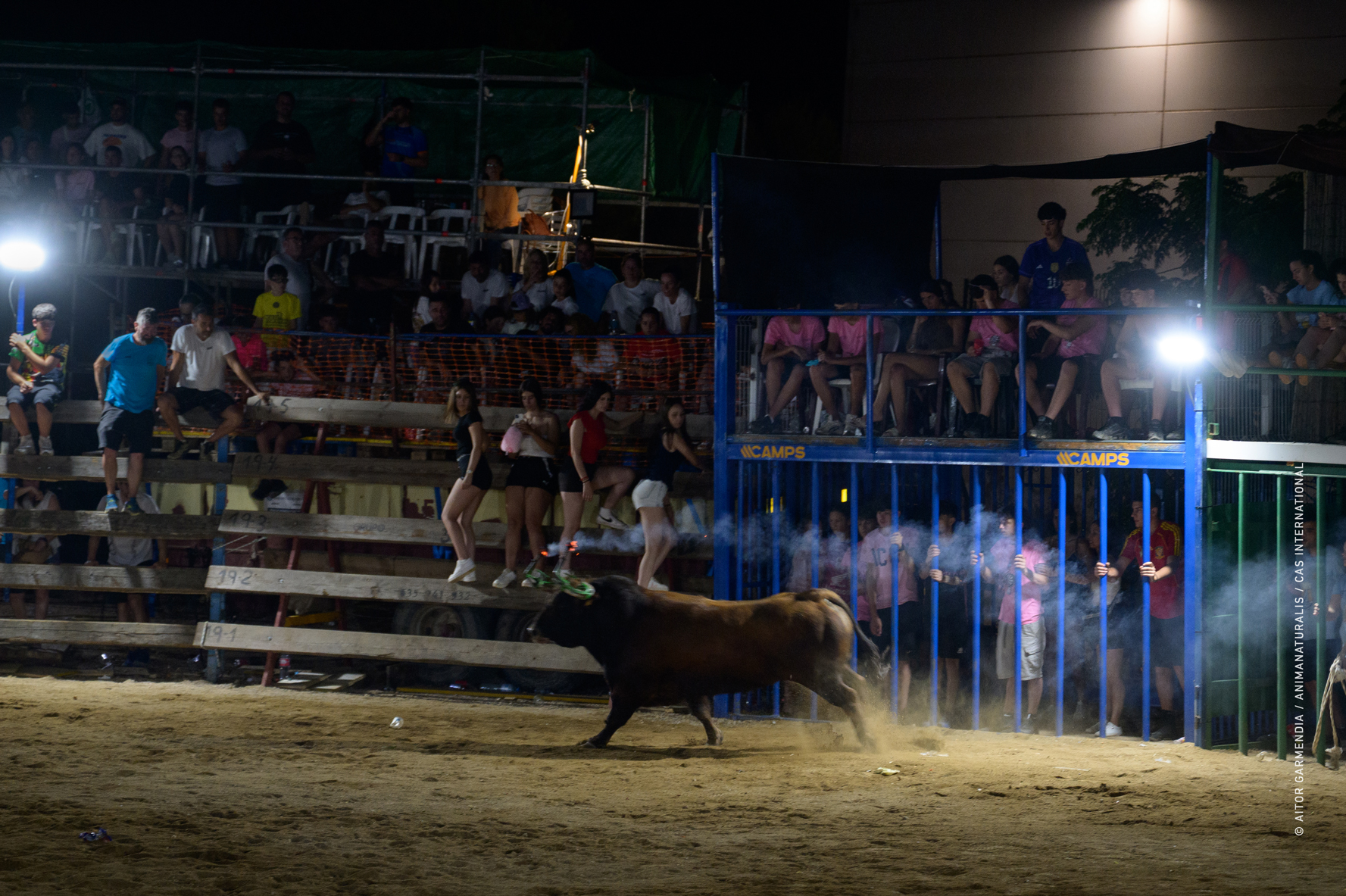
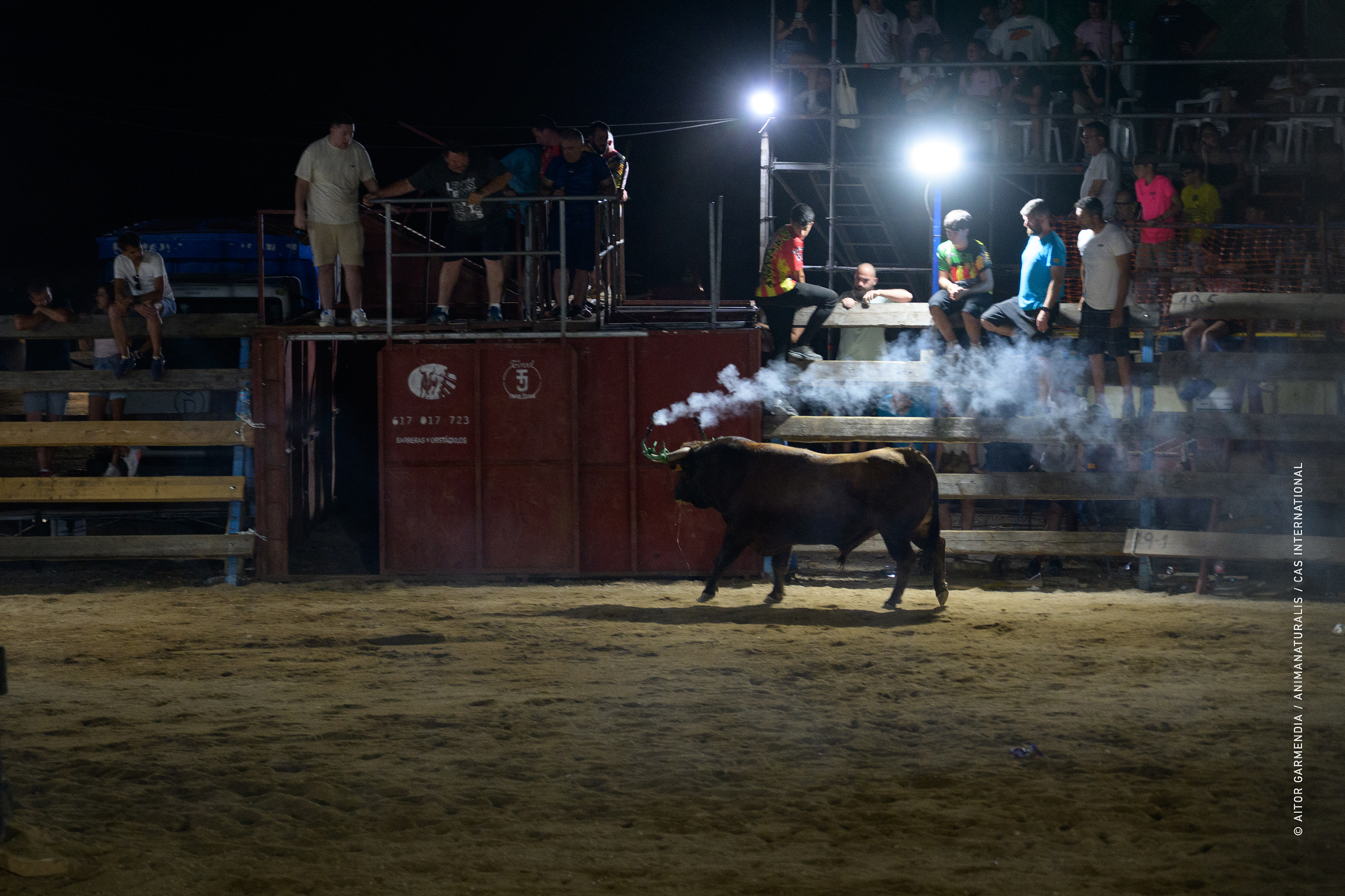
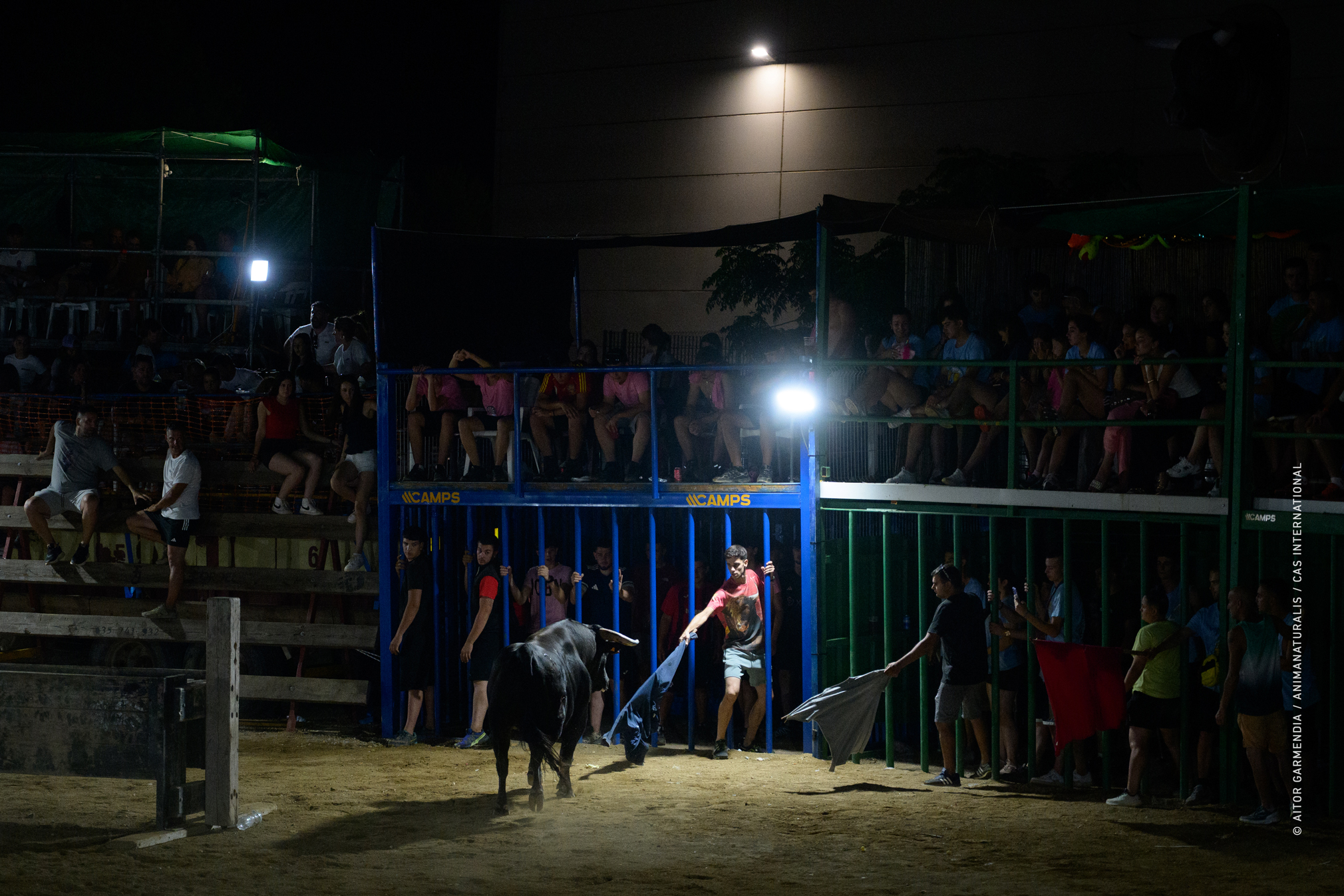
A bull emerges from a dark, narrow box, panting with fear, into a plaza lit by torches. Minutes later, two balls of fire burn above his head as he runs, blind with pain, into the boards that mark out his own ordeal. This scene, repeated hundreds of times every summer in southern Catalonia, coexists with animal welfare legislation that in practice fails to protect this particular animal: the Catalan law regulating "correbous" contains, according to AnimaNaturalis, loopholes that prevent town councils and taurine associations from being sanctioned even when they break the rules.
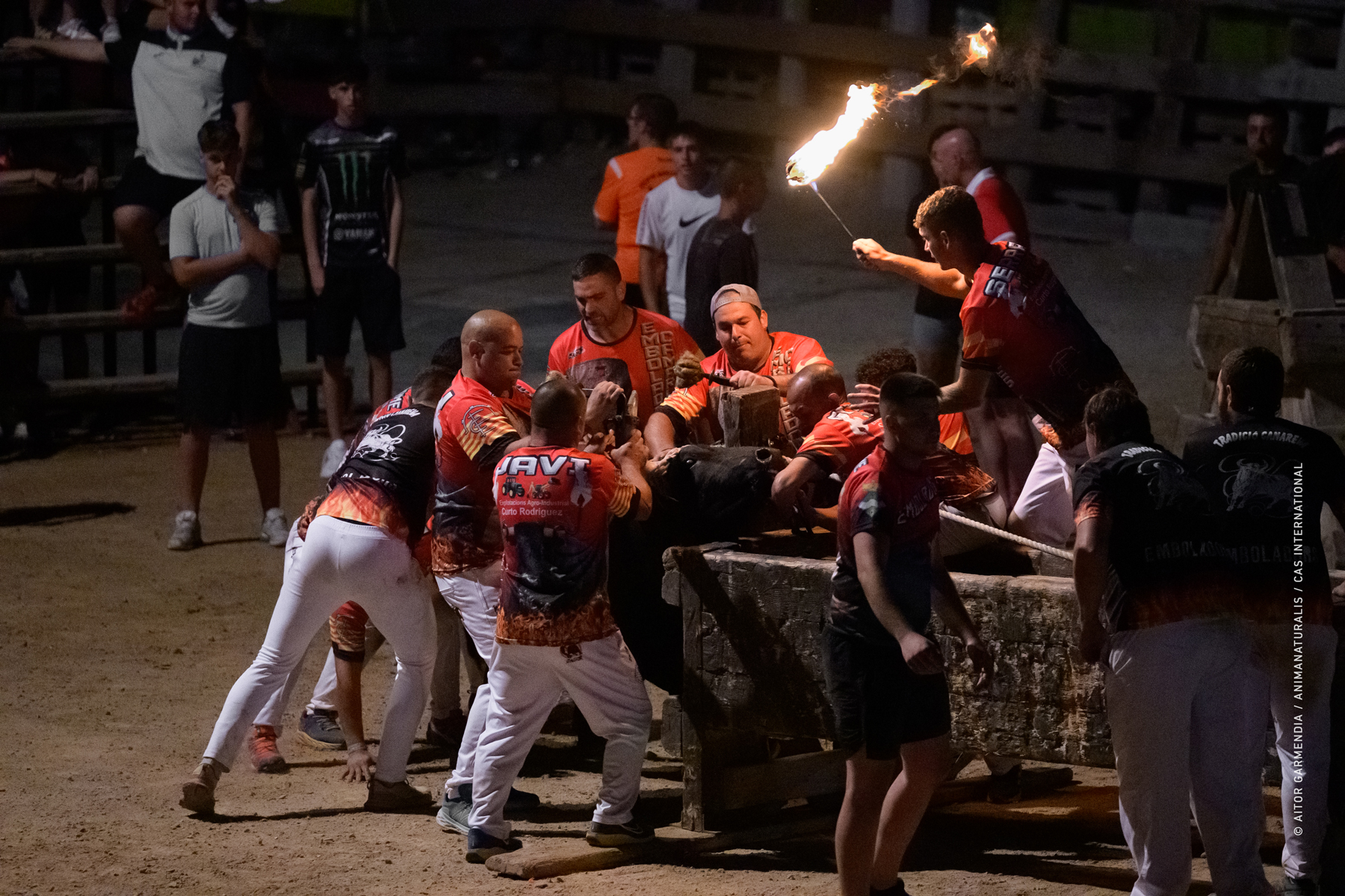
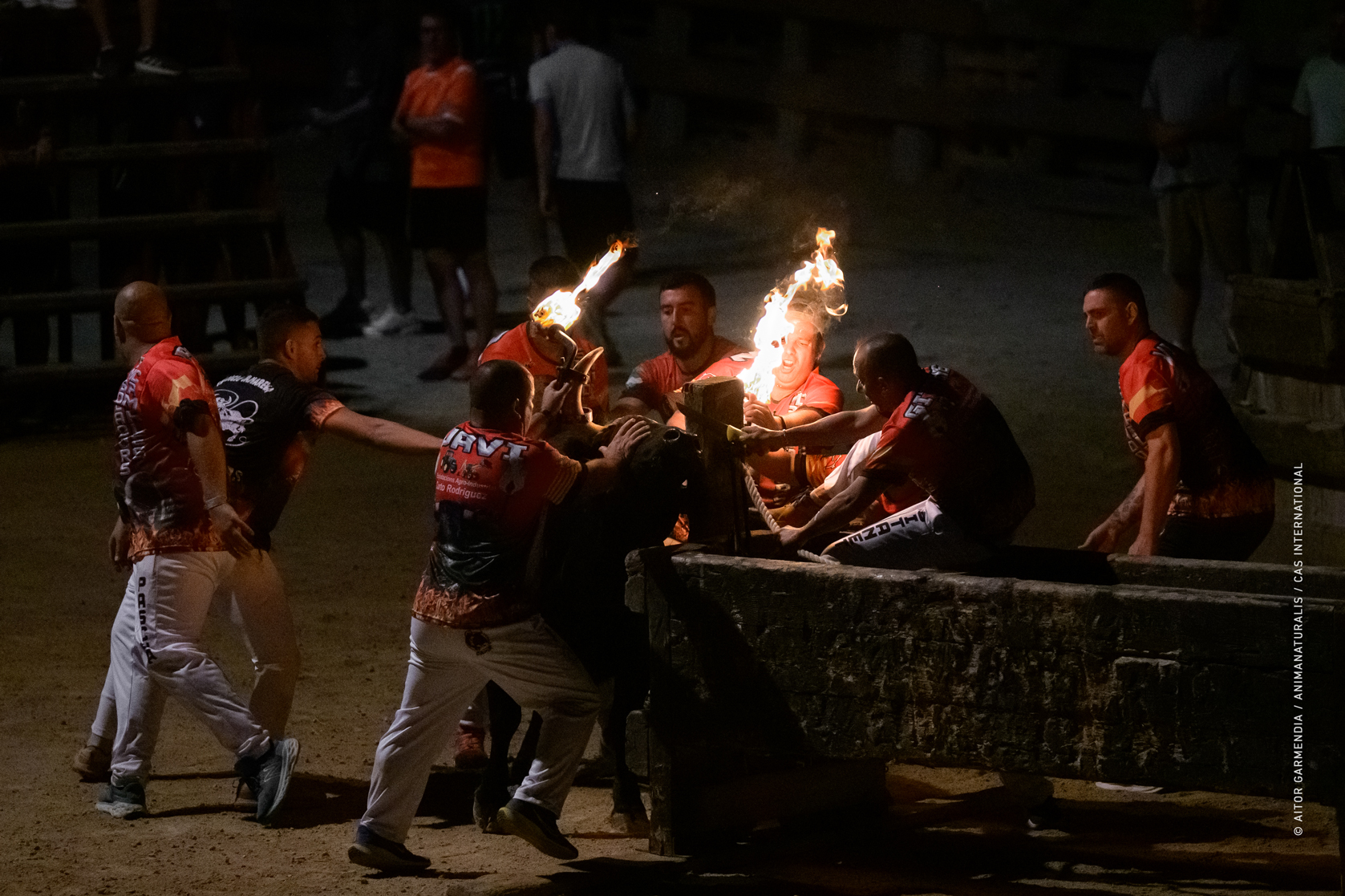
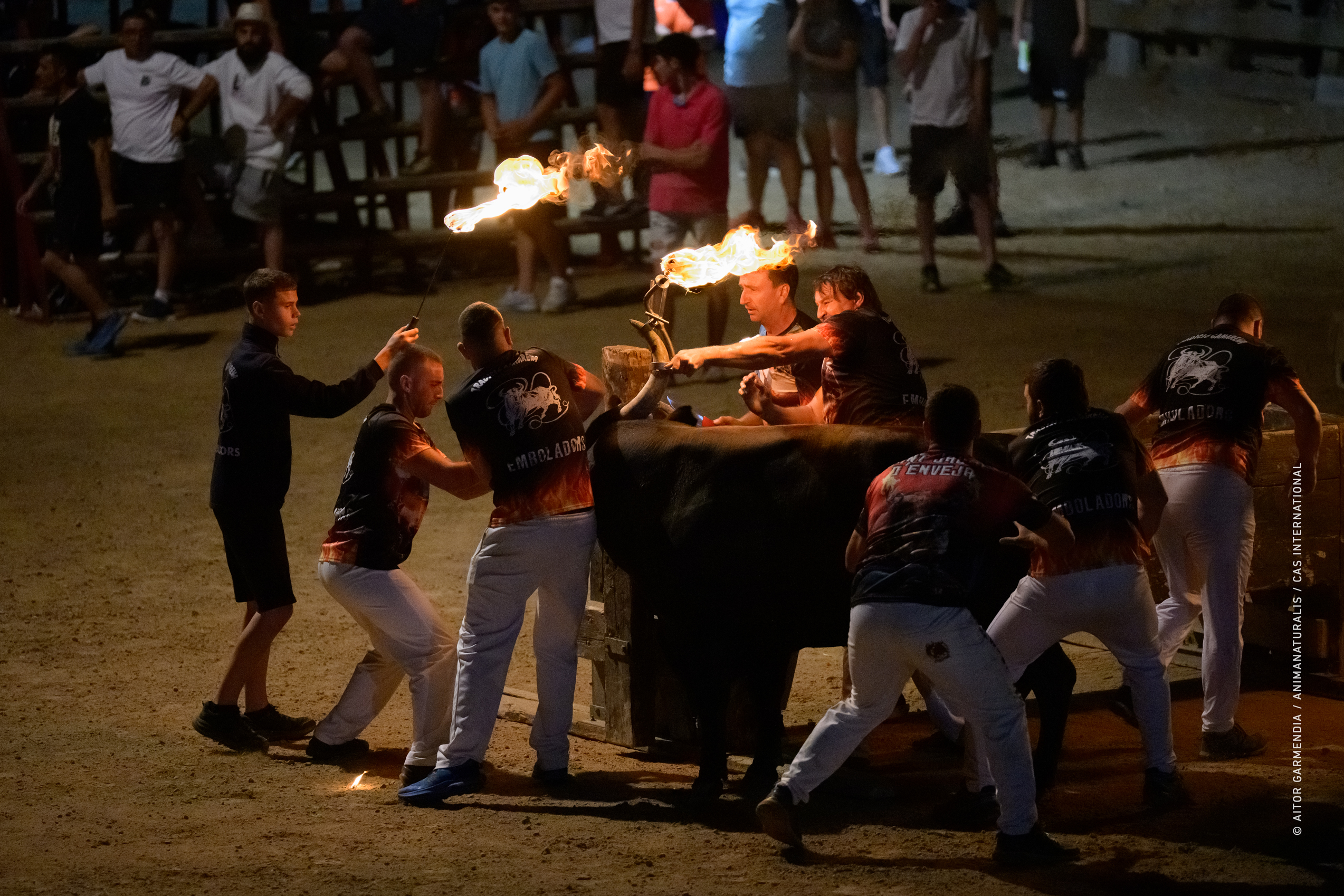
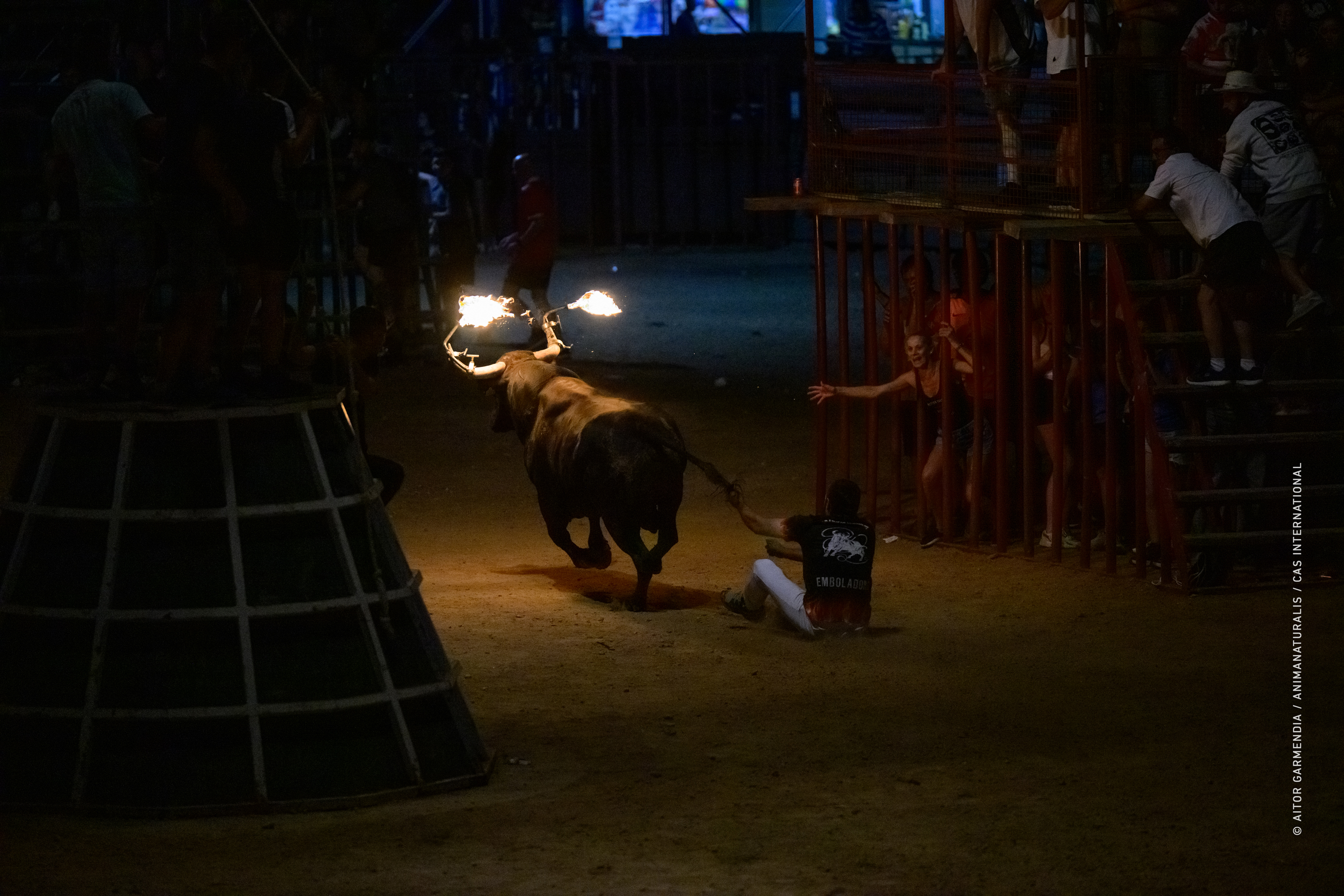
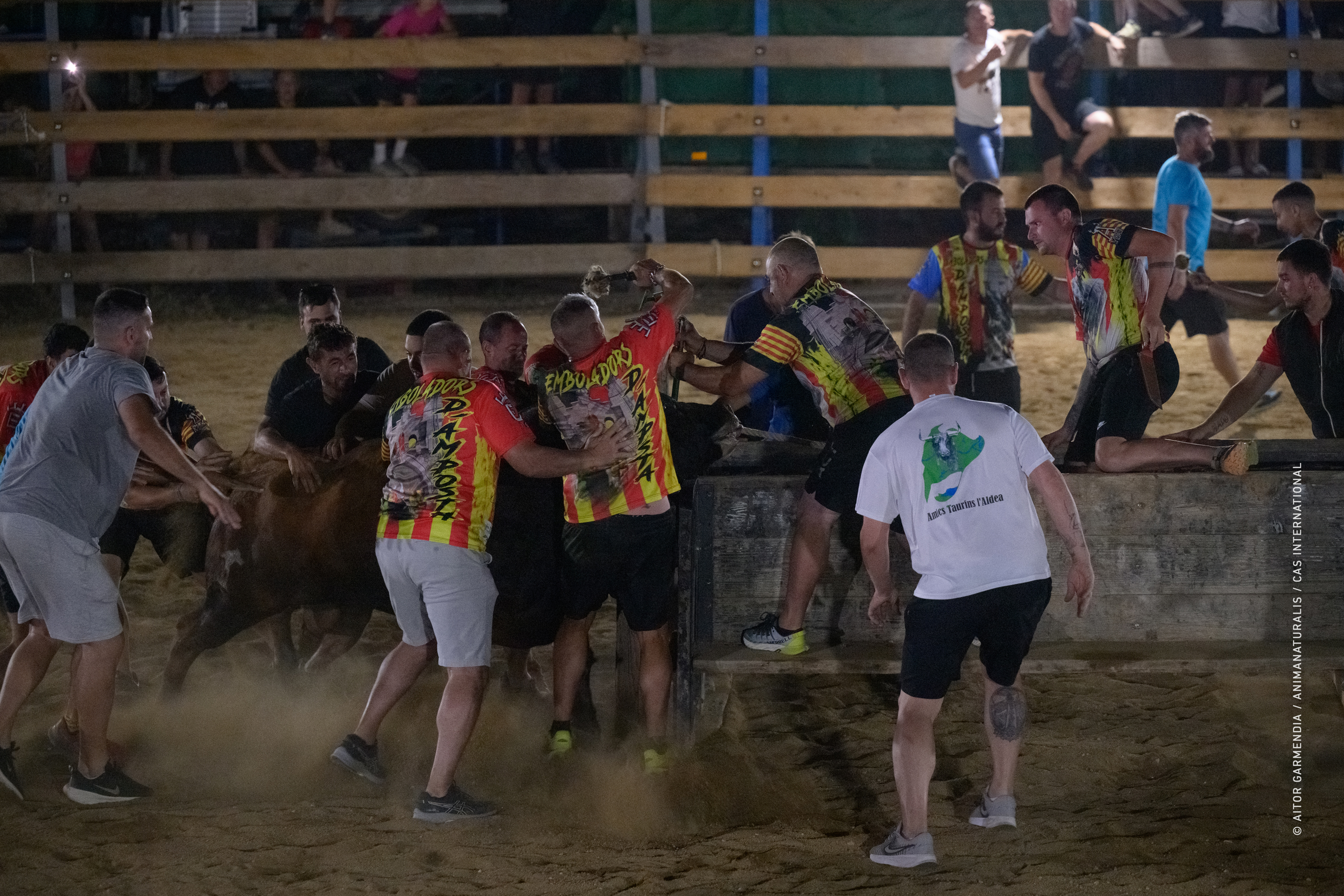
Our team filmed these festivities in Sant Jaume d'Enveja and L'Ampolla, two towns where we are already identified and where approaching with a camera carries real risk. "In both Sant Jaume d'Enveja and L'Ampolla, some of the bulls got tangled in the rope and suffered hard falls and jerks," recounts Aïda Gascón, director of AnimaNaturalis in Spain, describing what we witnessed those days.
According to figures compiled by the organization in previous years, the Terres de l'Ebre region programs more than 450 bull events in a single season, of which around a hundred include the fire-ball embolada. These are figures that, according to campaign sources, may vary from year to year, but they draw a clear trend: this practice is not disappearing, it is sustained by public budgets. "We have a law full of legal loopholes that makes it impossible to sanction town councils and taurine associations even when they break the rules," maintains Gascón. Here lies the paradox: animal welfare standards exist in Spain, yet a bull can still legally burn in a village square while those same standards are cited as a sign of progress.
What veterinary science says about their pain
For decades, parts of the taurine industry have claimed that these animals do not suffer the way a human being would, that their genetics prepare them to withstand pain without distress. The most recent veterinary reports disprove that idea with measurable data, not opinions. Stress markers in the blood of these animals—adrenaline, noradrenaline, and cortisol—spike during transport, restraint, and the event itself, reaching levels higher than those recorded in most routine cattle-handling situations.
Technical veterinary reports on the suffering of bulls in popular festivities also document elevated creatine kinase and other muscle enzymes, along with blood pH alterations consistent with a state of sustained physical and psychological suffering, not merely physical exertion. Add to this a fact rarely mentioned: many of these animals are reused across several editions of the event, so the stress from previous experiences accumulates with each new exposure to fire and the roar of the crowd.
"Nothing extraordinary... dragging the animal, immobilizing it against a wooden post, screwing metal fittings onto its horns, lighting esparto balls soaked in fuel on its horns, and enjoying yourselves while the animal runs desperate through fire and terror," describes Gascón, recalling what she has personally witnessed during these years of field investigation. Science does not need to imagine the suffering: it can measure it in every blood sample taken after the last fire ball burns out.
Documenting in order to ban
The only real path to ending toros embolados runs along two fronts that AnimaNaturalis works simultaneously: evidence and law. In Catalonia, a bill has already been introduced in the Parlament, driven by political groups in favor of banning the most aggressive forms of "correbous," including the embolada. For these initiatives to succeed, the documentary evidence our team gathers—video, photography, first-hand testimony—proves decisive before institutions and public opinion.
Every recording also becomes an administrative complaint whenever violations of the taurine regulations themselves are detected, as happened with the wooden structure that collapsed onto one of the animals, or with the negligent handling of fire balls we have documented in past editions. It is slow work, carried out town by town, but it has already led some town councils, such as L'Ampolla's in the past, to reduce the number of emboladas in favor of other, cheaper and less violent formats.
Change, when it comes, does not come only from a court ruling. It also comes from the thousands of people who see these images for the first time and can no longer look away. That, ultimately, is the goal of all our field investigation: to make the invisible impossible to ignore.
Your support keeps every trip to these towns going
If you've read this far, you've already done something many people avoid: looked directly at what happens to a toro embolado. You can take one more step. You can share this report so these images reach those who haven't seen them yet, and you can sign and spread the campaigns demanding an effective ban on this practice in Catalonia.
Our team will keep traveling to other towns in the coming days, cameras in hand, to document another cruel tradition involving bulls that we still cannot announce for security reasons. We already have more dates confirmed on the calendar, and we are preparing an even broader investigation for 2027. None of this is possible without the financial support of those who, like us, believe that evidence can change the law.
"Every time we come back from a town where we've been marked as enemies, I think of the bull we left behind, still smelling of burnt flesh, and I know we will go back as many times as it takes," says Gascón. That determination is the same one that keeps an exhausted bull going, still burning with the last embers of the fire balls on his head, searching for a way out in the darkness of the plaza. The difference is that we can choose to keep standing there, camera rolling, until that fire is finally put out for good.


