
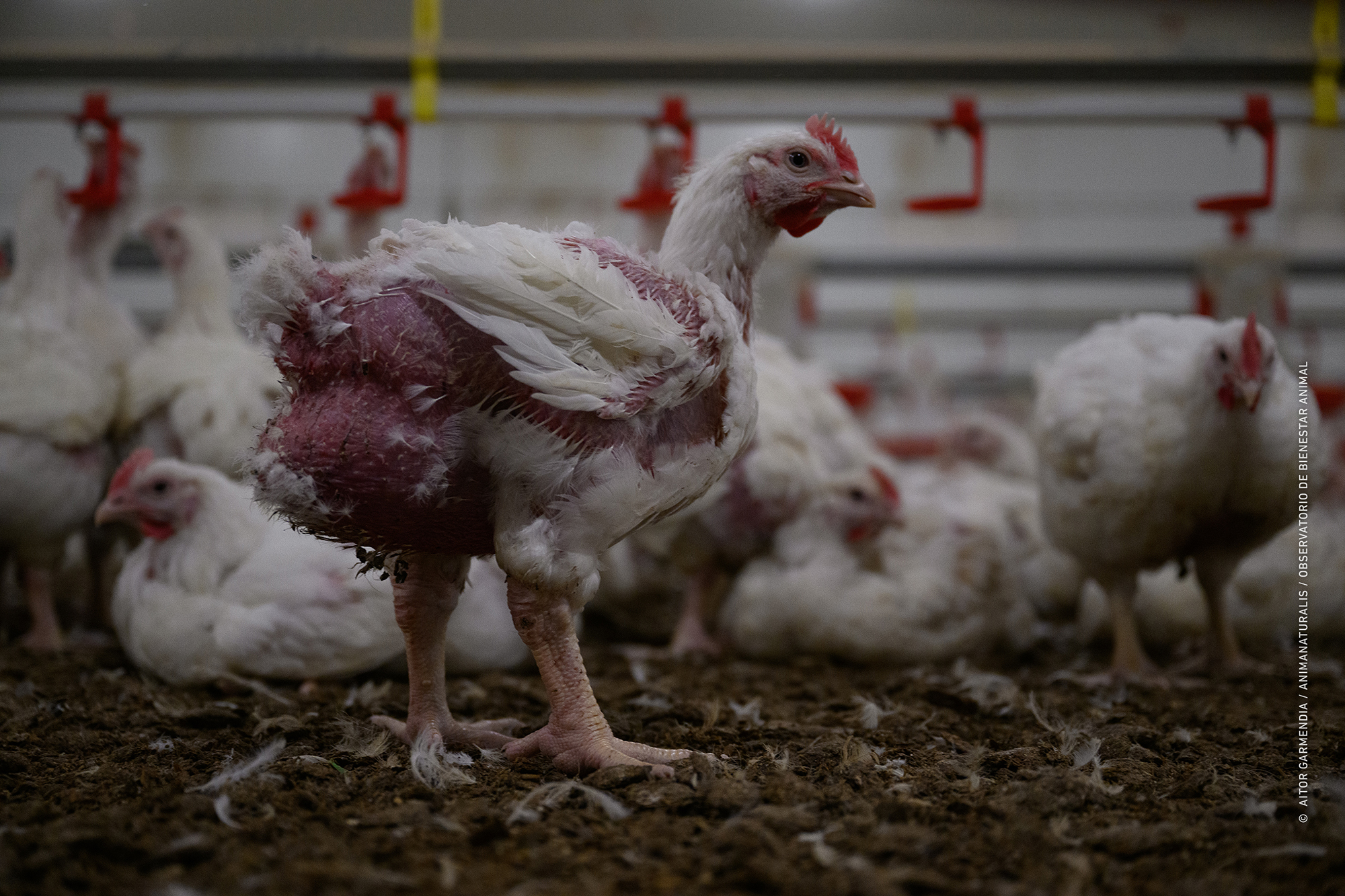
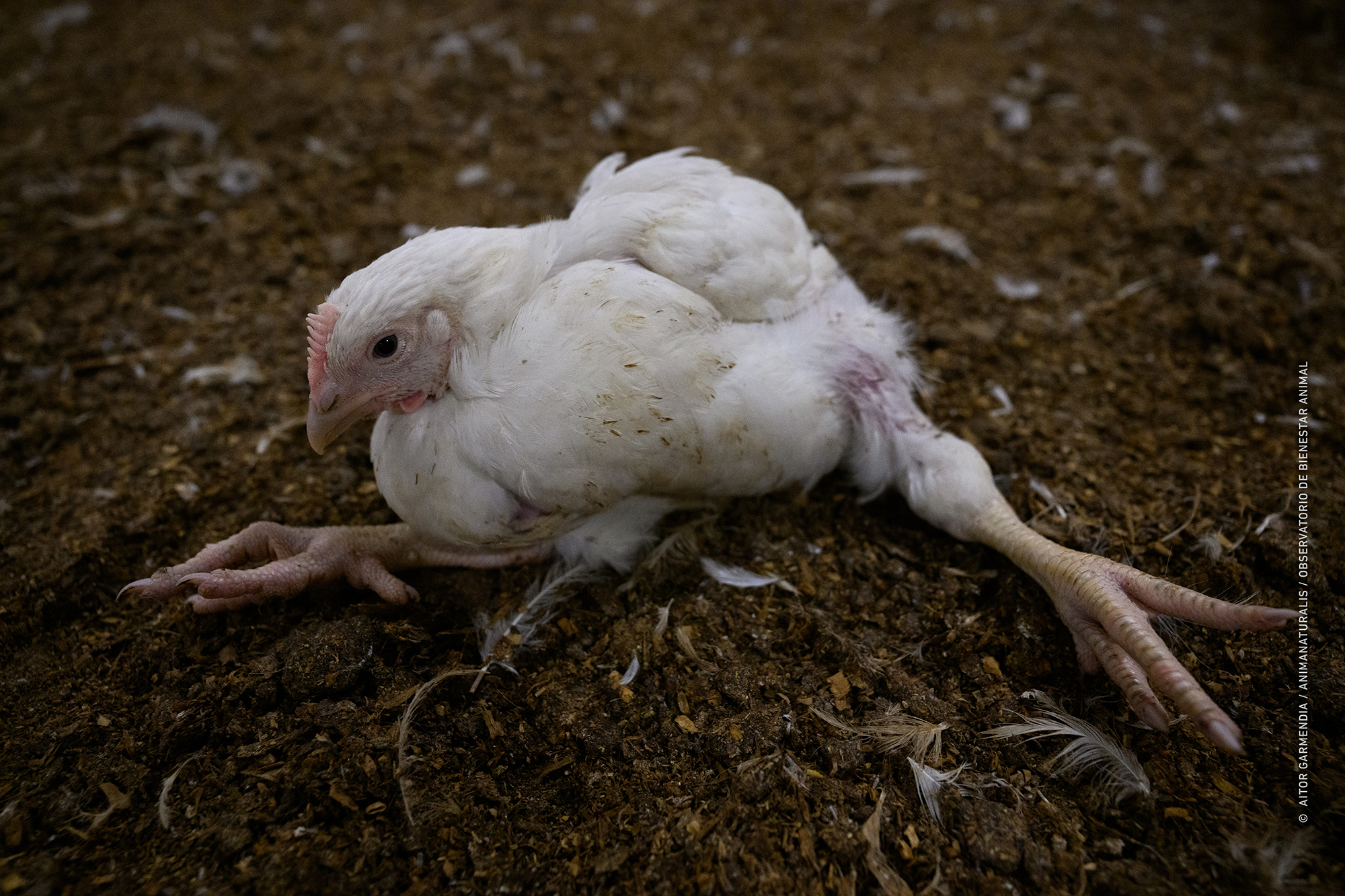
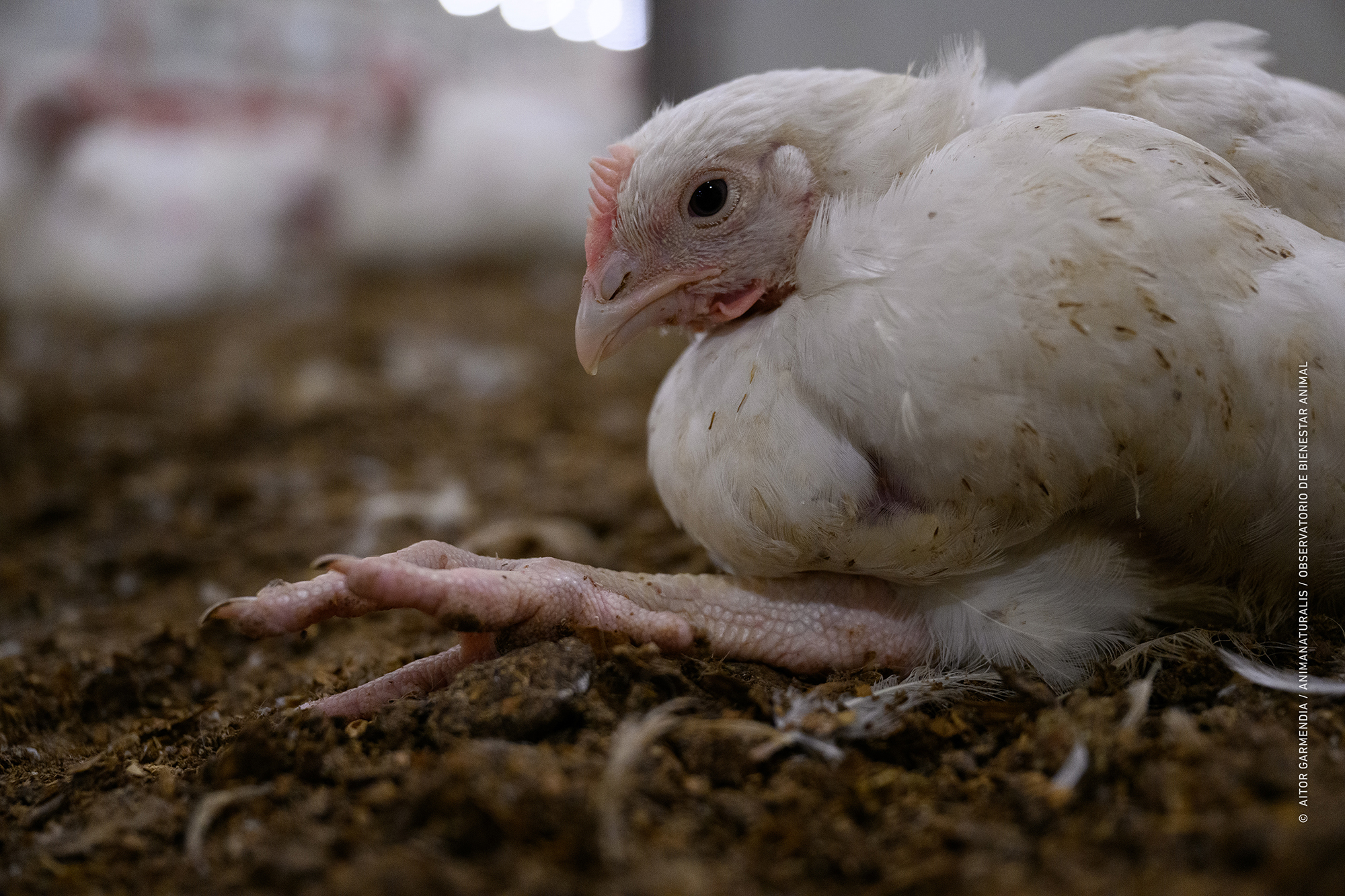
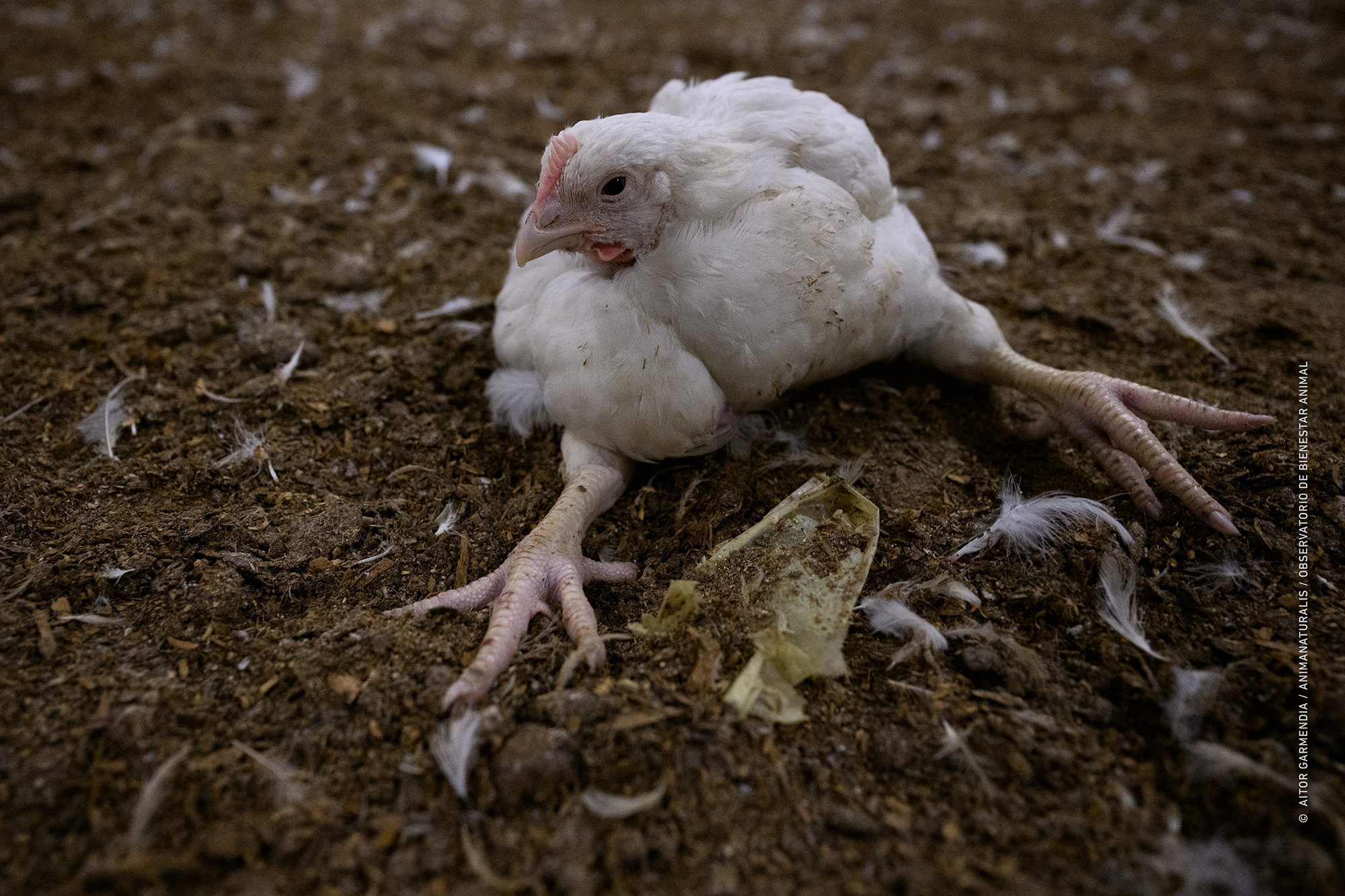
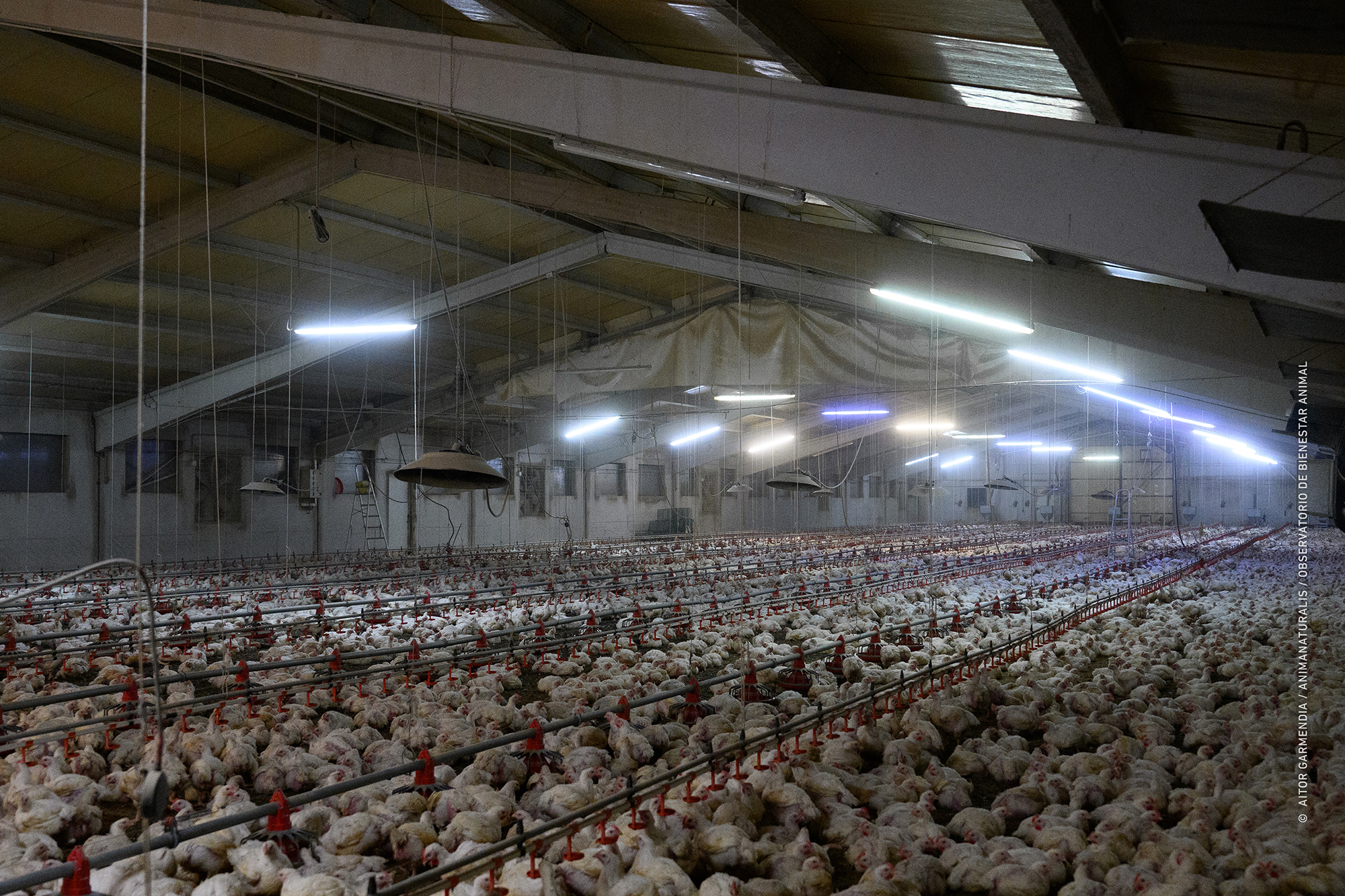
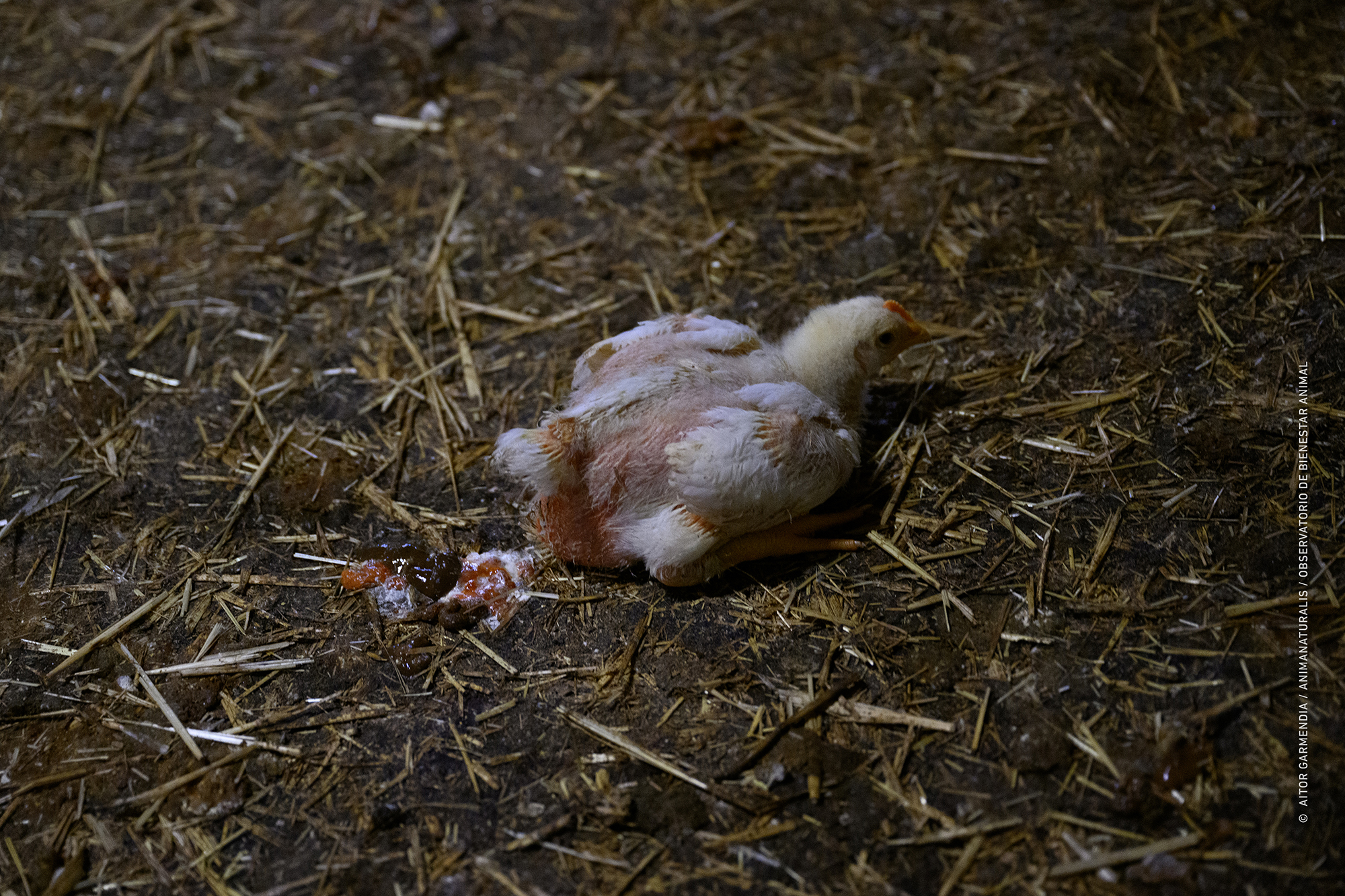
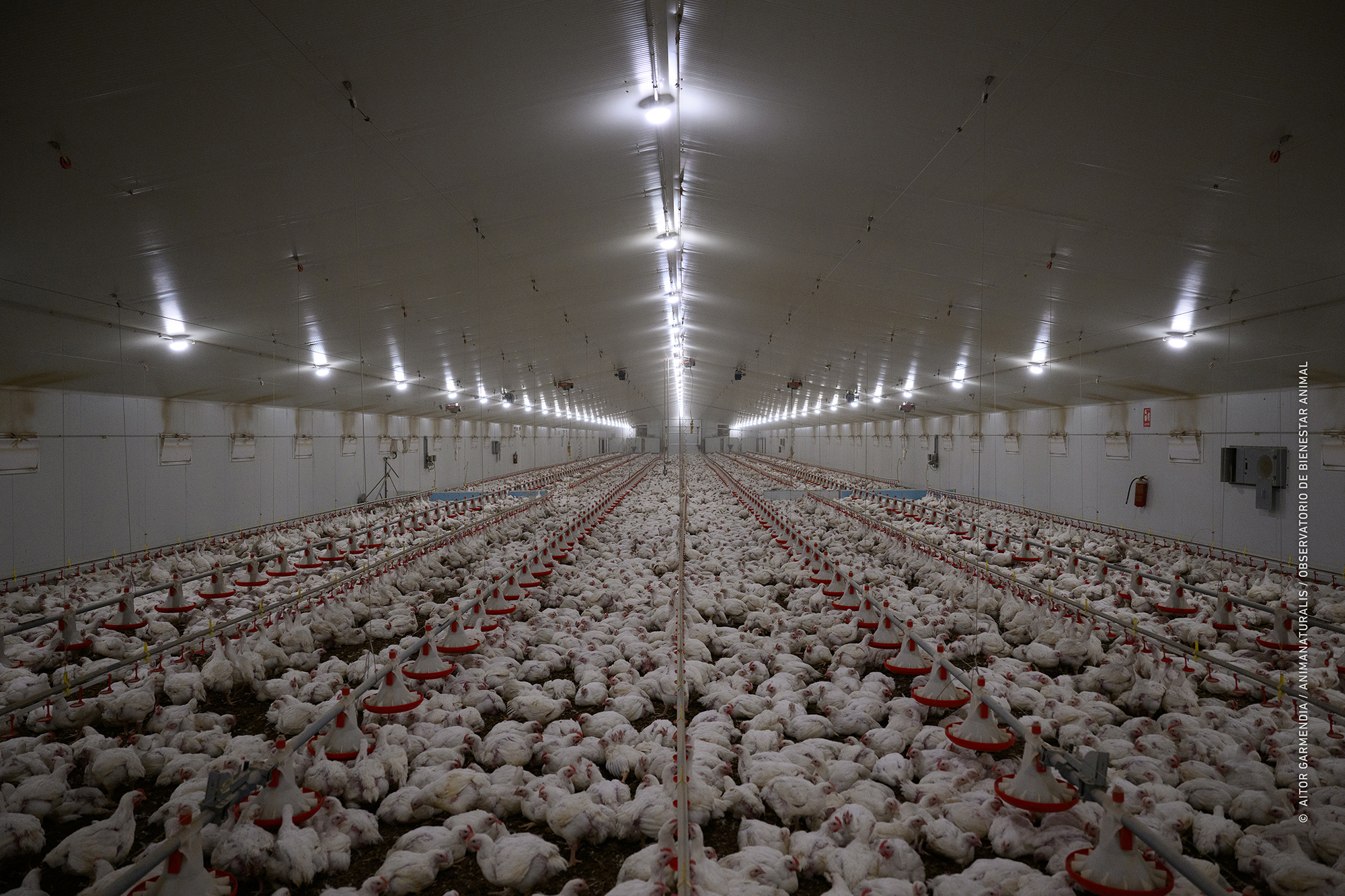
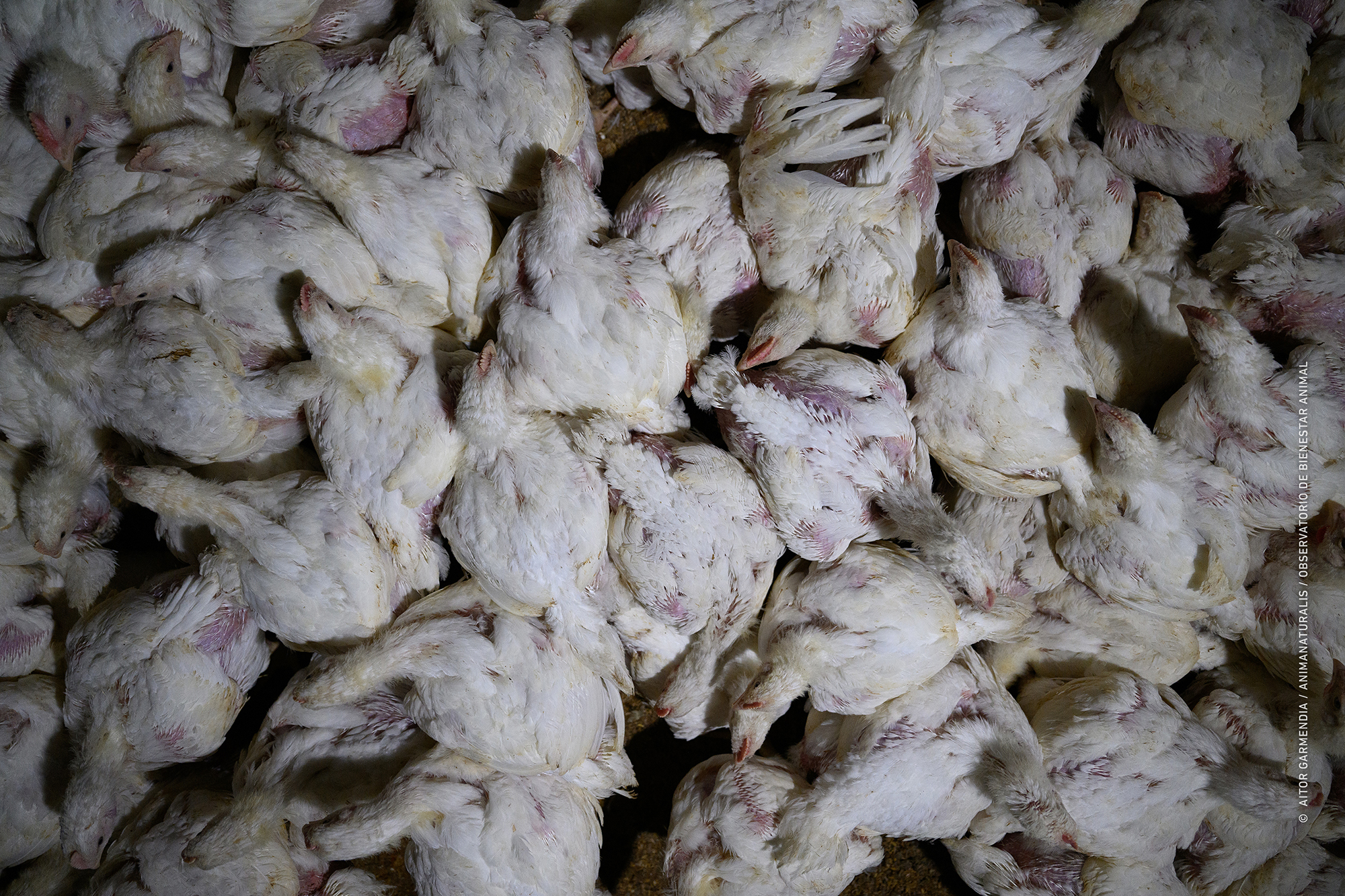
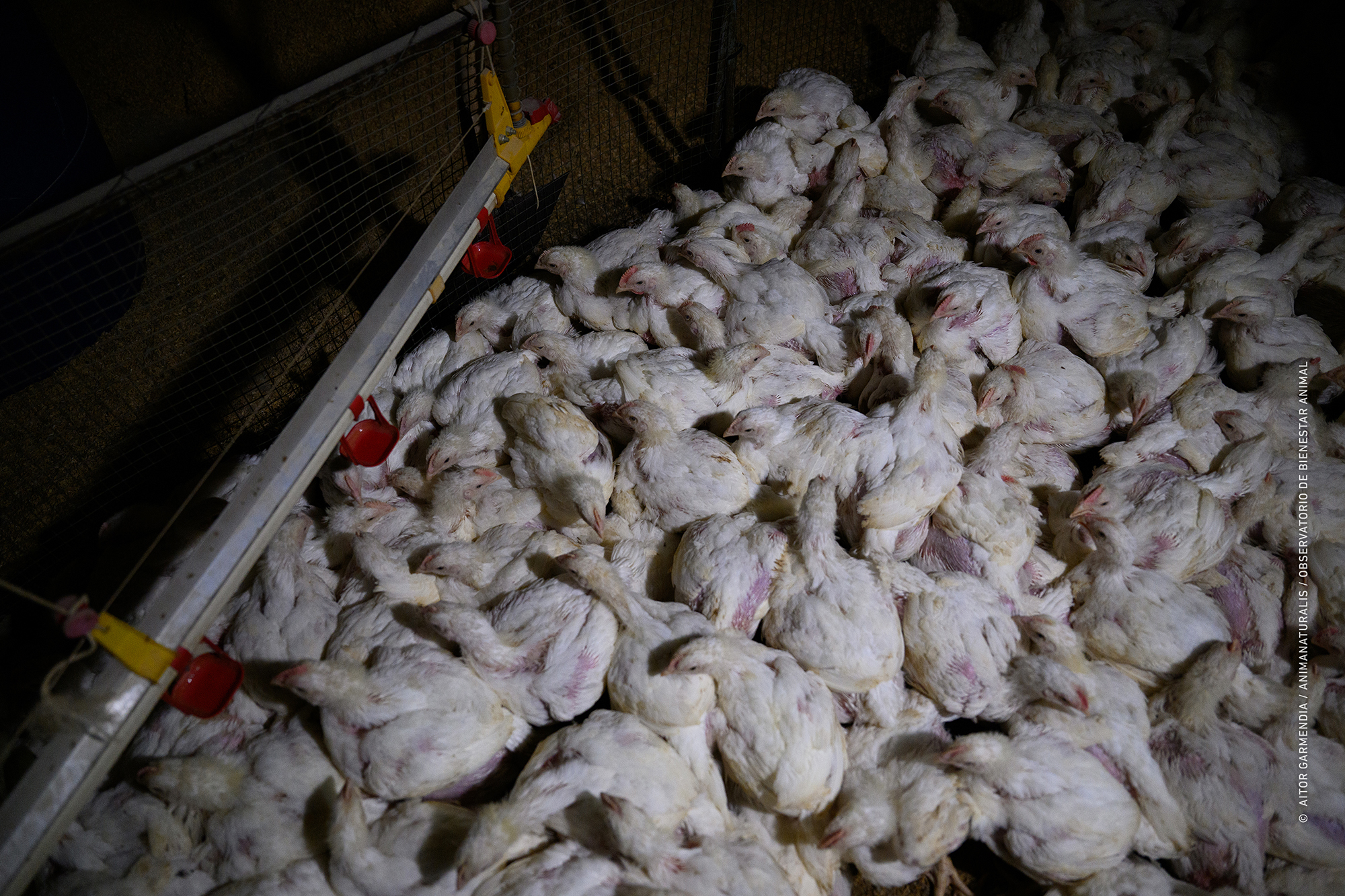
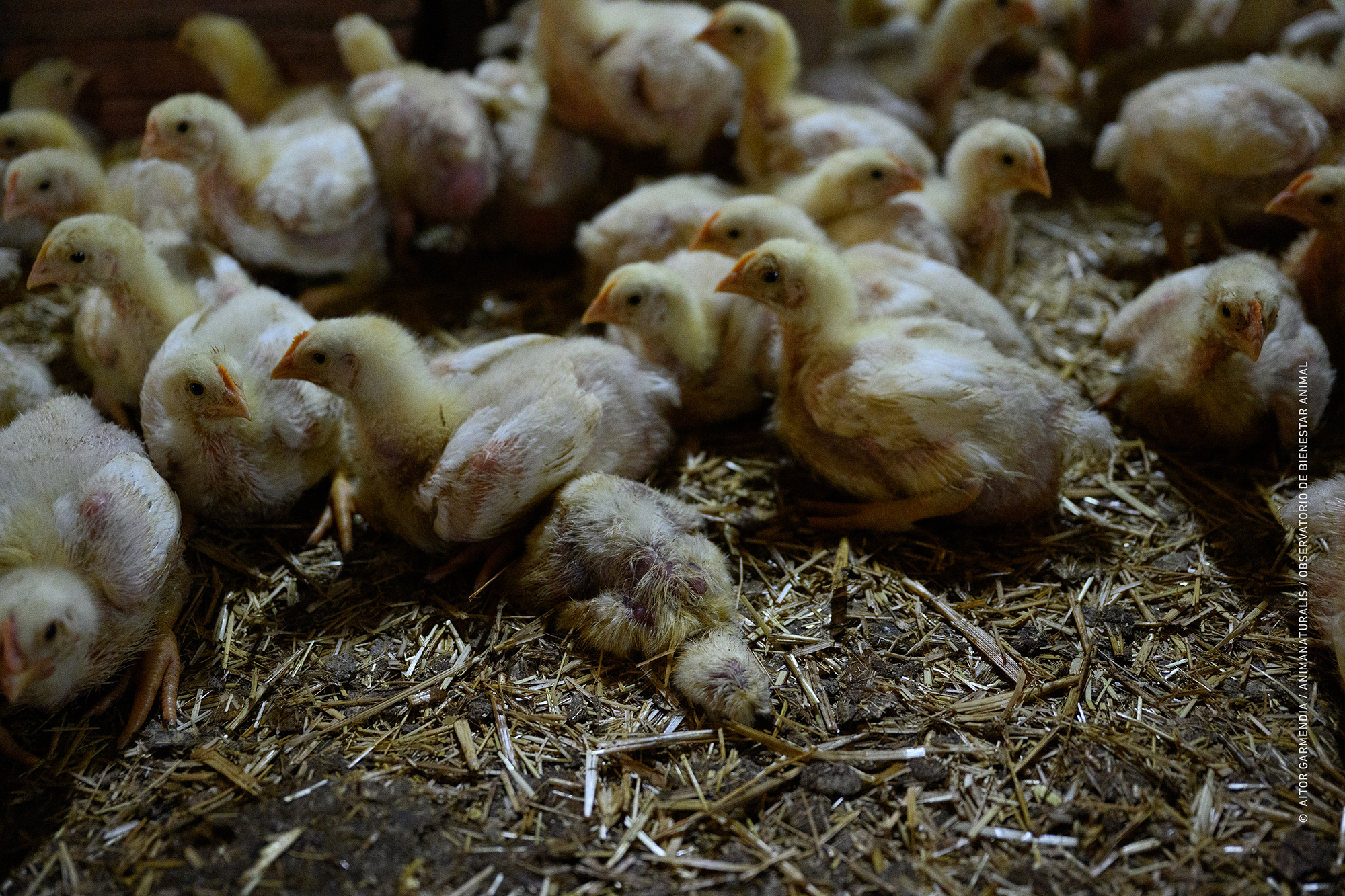
On a farm in Castilla-La Mancha, hundreds of chickens can barely move. Their bodies, genetically designed to reach 2.8 kilograms in just 42 days, bear a weight that their bones and organs are not prepared to support. These are not extreme cases or negligent farms: they are the documented reflection of an industry that, according to the investigation by AnimaNaturalis and the Animal Welfare Observatory (OBA), constitutes the dominant model in Spain.
The images, captured by photojournalist Aitor Garmendia and published on May 19, 2026, show what the data has been warning about for years. Spain slaughtered more than 810 million chickens in 2025, according to data from the Ministry of Agriculture, Fisheries and Food (MAPA). The broiler chicken —raised for meat— represents 82% of all national poultry production and almost one out of every four euros (23%) of the total volume of Spanish livestock. The industry that generates these figures operates, in its vast majority, under conditions that the 2023 opinion of the European Food Safety Authority (EFSA) considers incompatible with animal welfare.
"What the consumer perceives as a low price on the shelf is, in reality, the result of a system of maximum biological stress," states Aïda Gascón, director of AnimaNaturalis in Spain. "We are facing animals that are 'babies' with adult bodies whose organs fail before they reach the slaughterhouse. It is not a system failure, it is the system operating according to its own efficiency parameters: maximum cost optimization at the expense of agonizing and systemic animal suffering."
The invisible cost of every tray
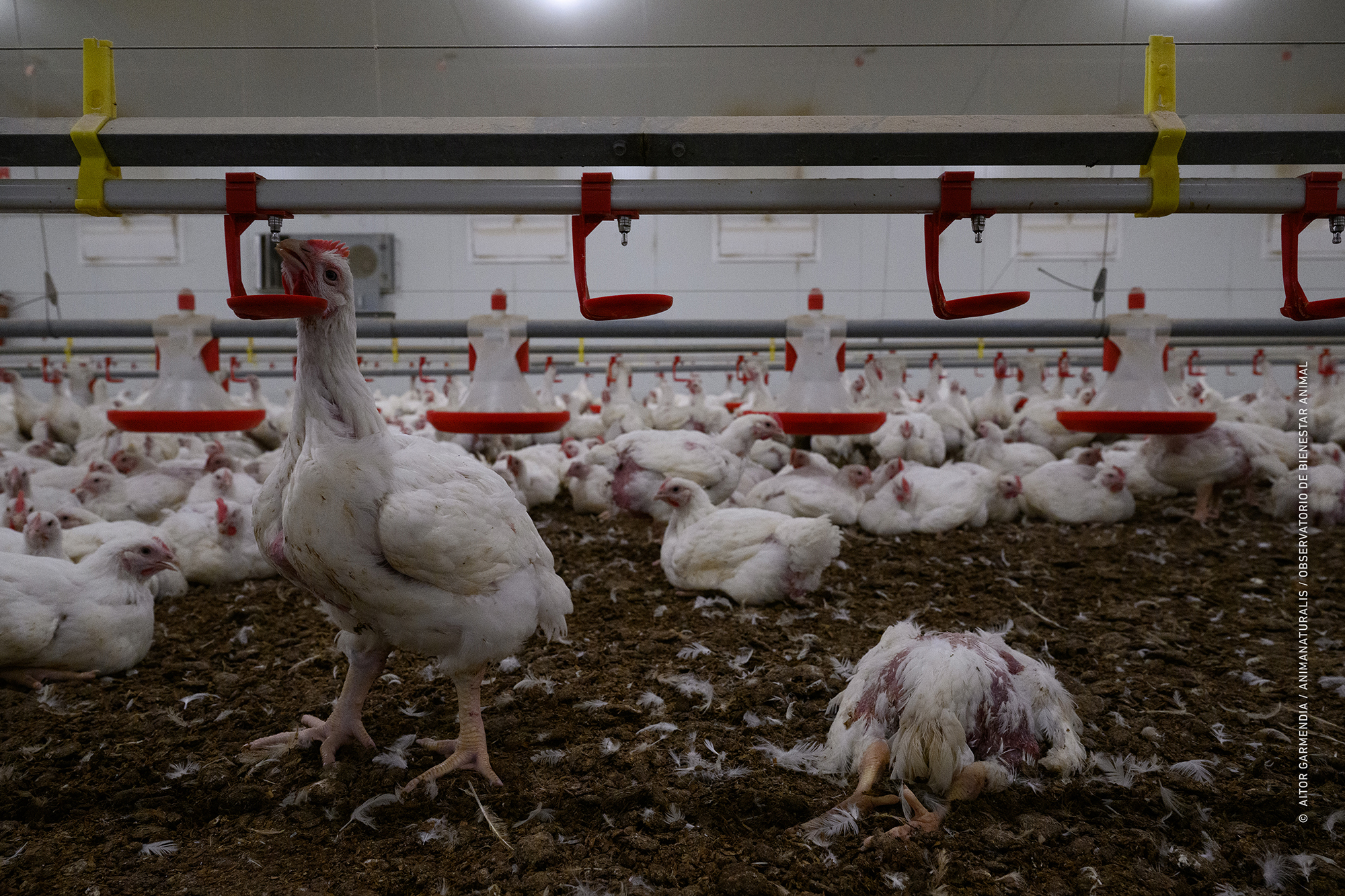
Animals raised under the predominant industrial model have been genetically selected to fatten at a metabolic rate that exceeds their own body's capacity. According to numerous studies cited in the investigation, this process generates disease, myopathies, and cardiovascular failures before the individuals leave the farm. There is also evidence suggesting that more than half of these chickens suffer from clinical lameness or develop leg lesions due to permanent contact with floors saturated with excrement.
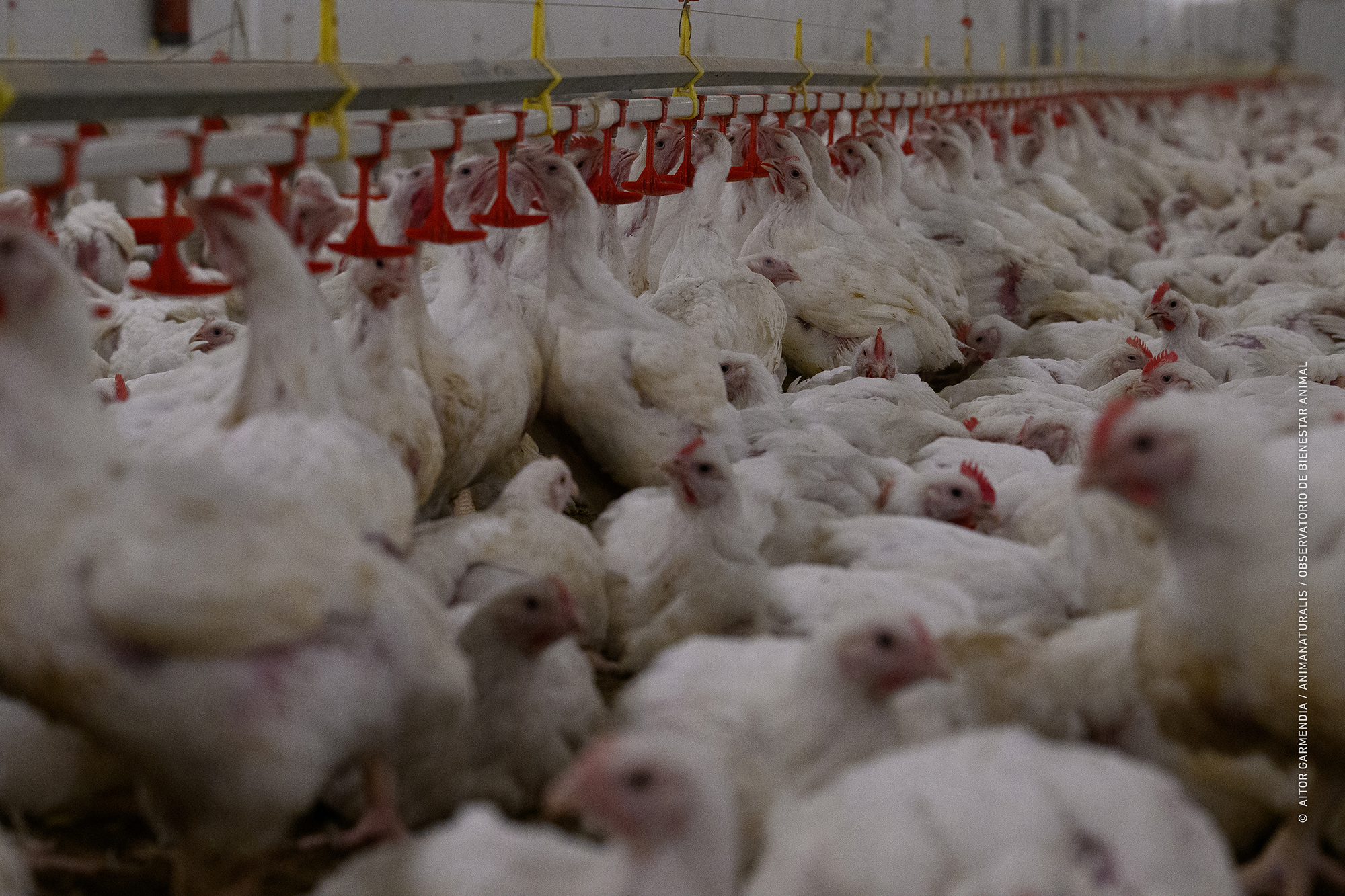
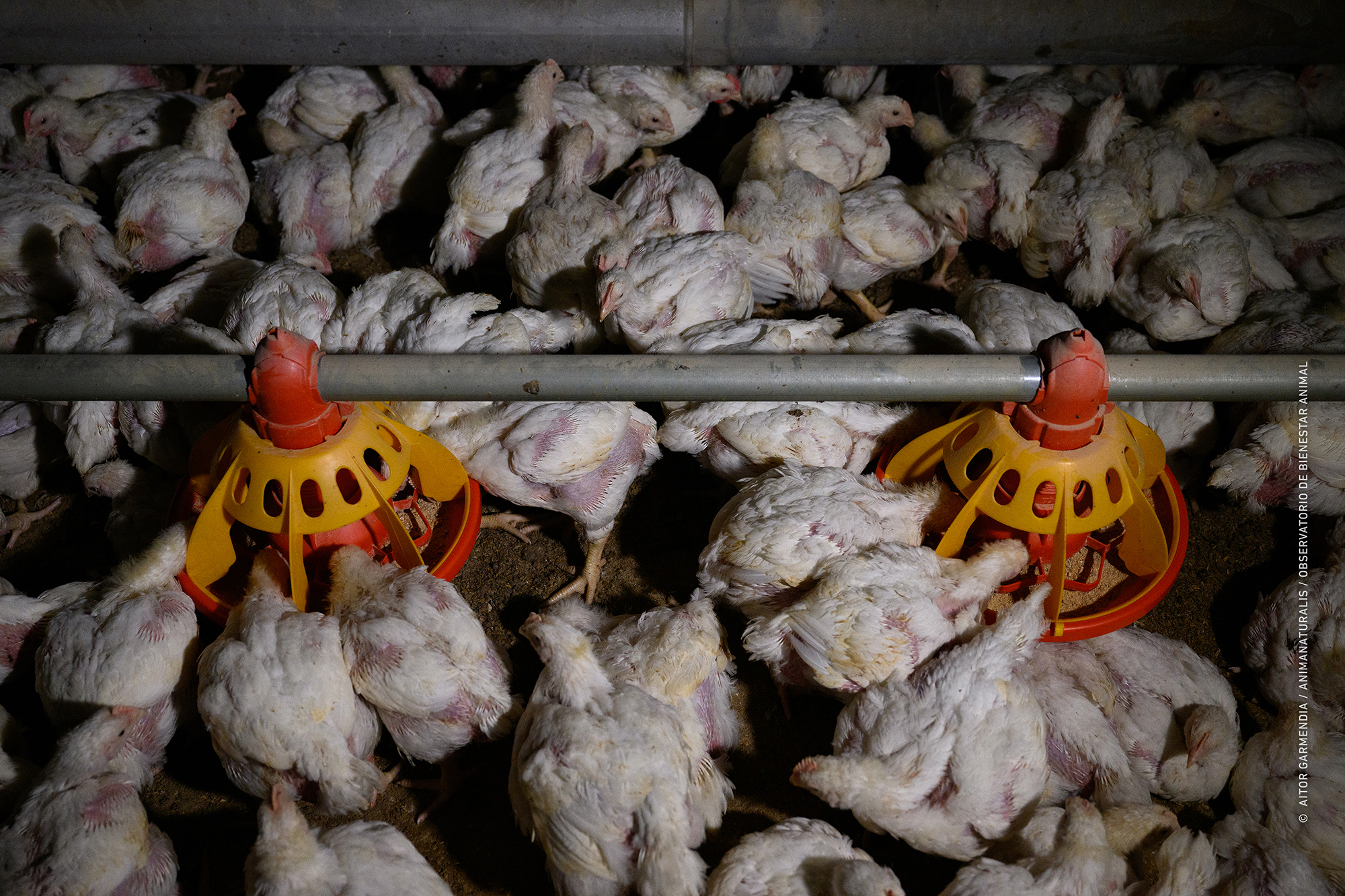
Added to this is the environment in which their entire lives are spent. Current regulations allow densities of up to 42 kg/m², the maximum legal limit established by the European Union. This is a space that prevents any expression of natural behavior. The 2023 EFSA opinion recommended reducing this maximum density to 11 kg/m² and imposing a limit of 50 grams of daily growth —compared to the more than 100 grams they can gain on some days in the documented systems—. None of these recommendations have yet been translated into European legislation.
The use of antibiotics adds another layer of concern. Although the European Union banned their use as growth promoters in 2006, Spain continues to use twice as much of these medicines as the European average in proportion to its animal population, according to data from the European Medicines Agency (EMA). Sales of veterinary antibiotics in the EU grew by 5% in 2024, breaking a declining trend of more than a decade. There is broad scientific consensus, endorsed by EFSA, linking overcrowding and stress in industrial barns to the immune weakening of birds, which favors bacterial spread and feeds back into the use of drugs, aggravating the global problem of antibiotic resistance.
"Responsibility cannot fall solely on consumers; it is the industry that must raise the standard," emphasizes José Luis Murillo, Director General of OBA. "It is the industry that must decide whether it wants to lead the modernization of the sector or continue defending a model based on the biological precariousness of the animal."
Europe advances. Spain waits
The contrast with other European countries is revealing. Norway has announced the total elimination of fast-growing breeds by 2027. In the Netherlands, 100% of fresh chicken already meets higher welfare standards under the Better Life label. Spain, on the other hand, despite being the second largest producer of chicken meat in the EU —only behind Poland— and having a self-sufficiency rate of 97.1%, maintains the intensive model intact.
Social demand exists and is overwhelming. More than 230,000 official responses were recorded in the public consultation on animal welfare in the EU. The 2023 Eurobarometer reveals that 91% of European citizens consider that the welfare of animals on farms should be better protected, and that 94% believe that all farm animals should have enough space to move freely. This social majority finds no response in the market: the Spanish consumer is not actively choosing low-welfare models; they are consuming the only available and affordable supply.
Therefore, OBA and AnimaNaturalis urge the Spanish industry, and in particular the employers' association AVIANZA, to commit to the transition towards higher welfare models and to sign the European Chicken Commitment (ECC), the European standard that implies the use of slower-growing breeds and density reduction. According to both organizations, this is the only effective way to align the real supply with society's expectations.
Gascón adds that "the long-term viability of the food system requires a reduction in meat consumption in favor of high-quality plant protein. The commitment to protein diversification would reduce environmental pressure, improve global food security, and have a direct positive impact on people's health."
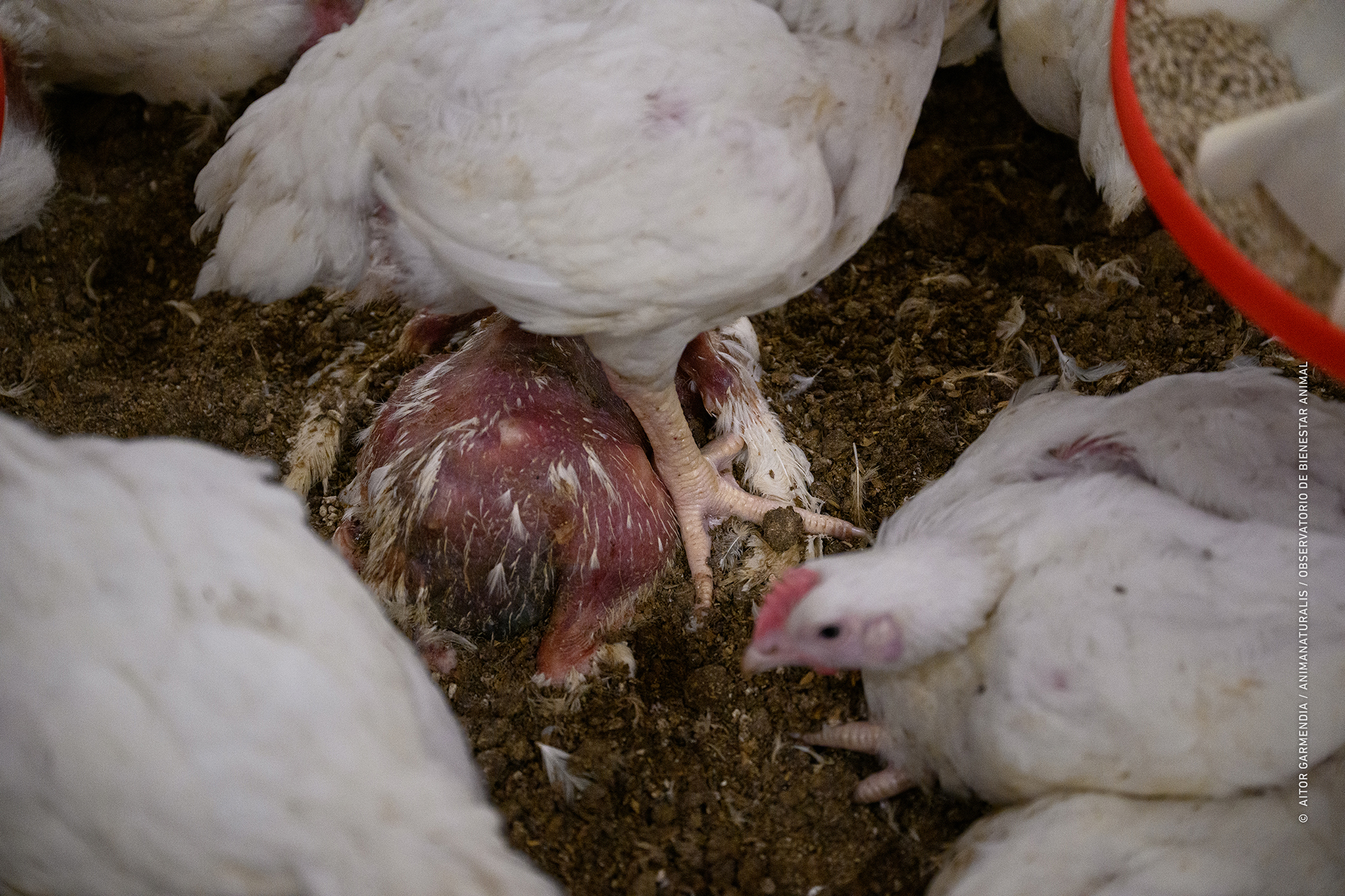
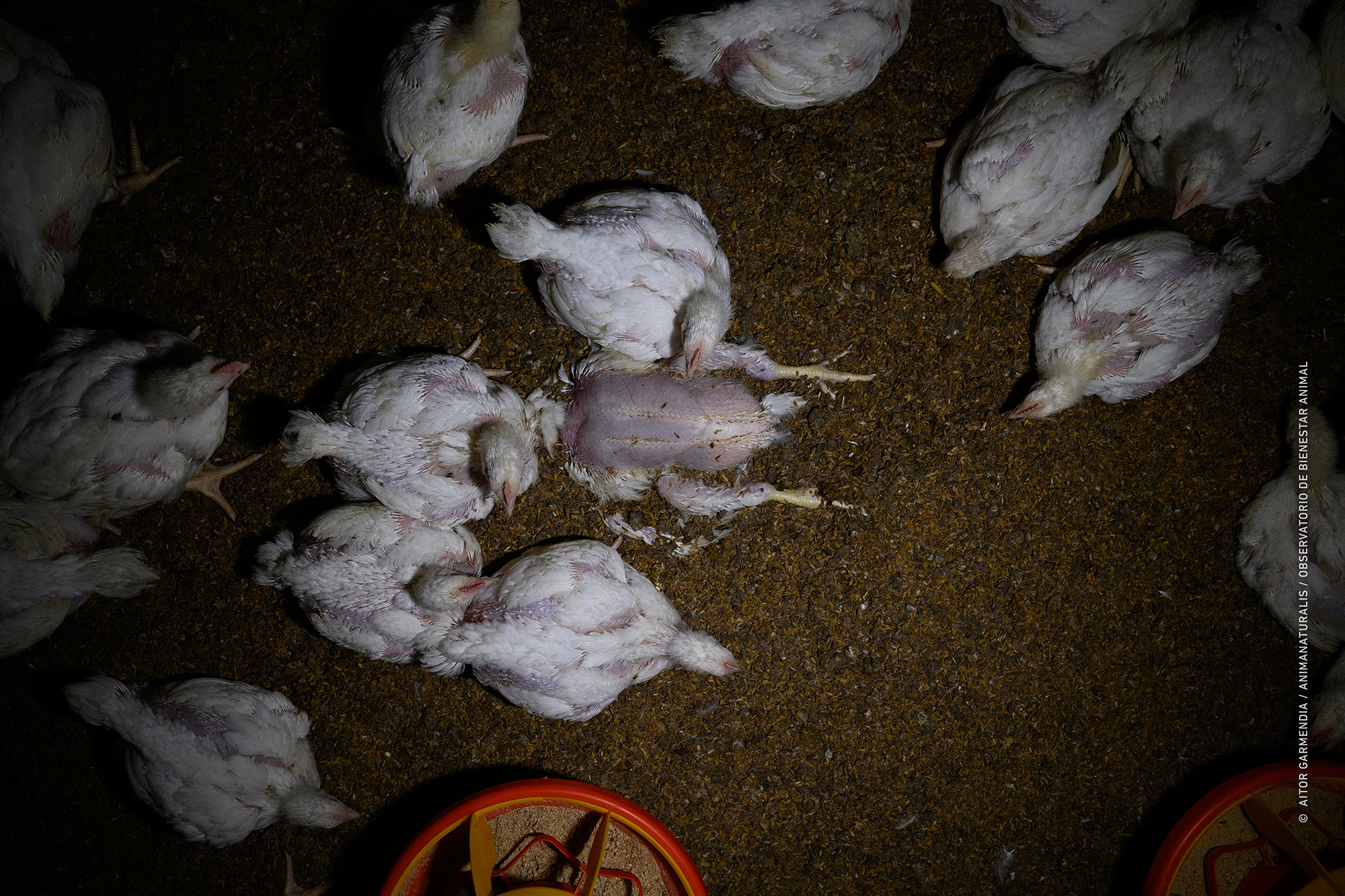
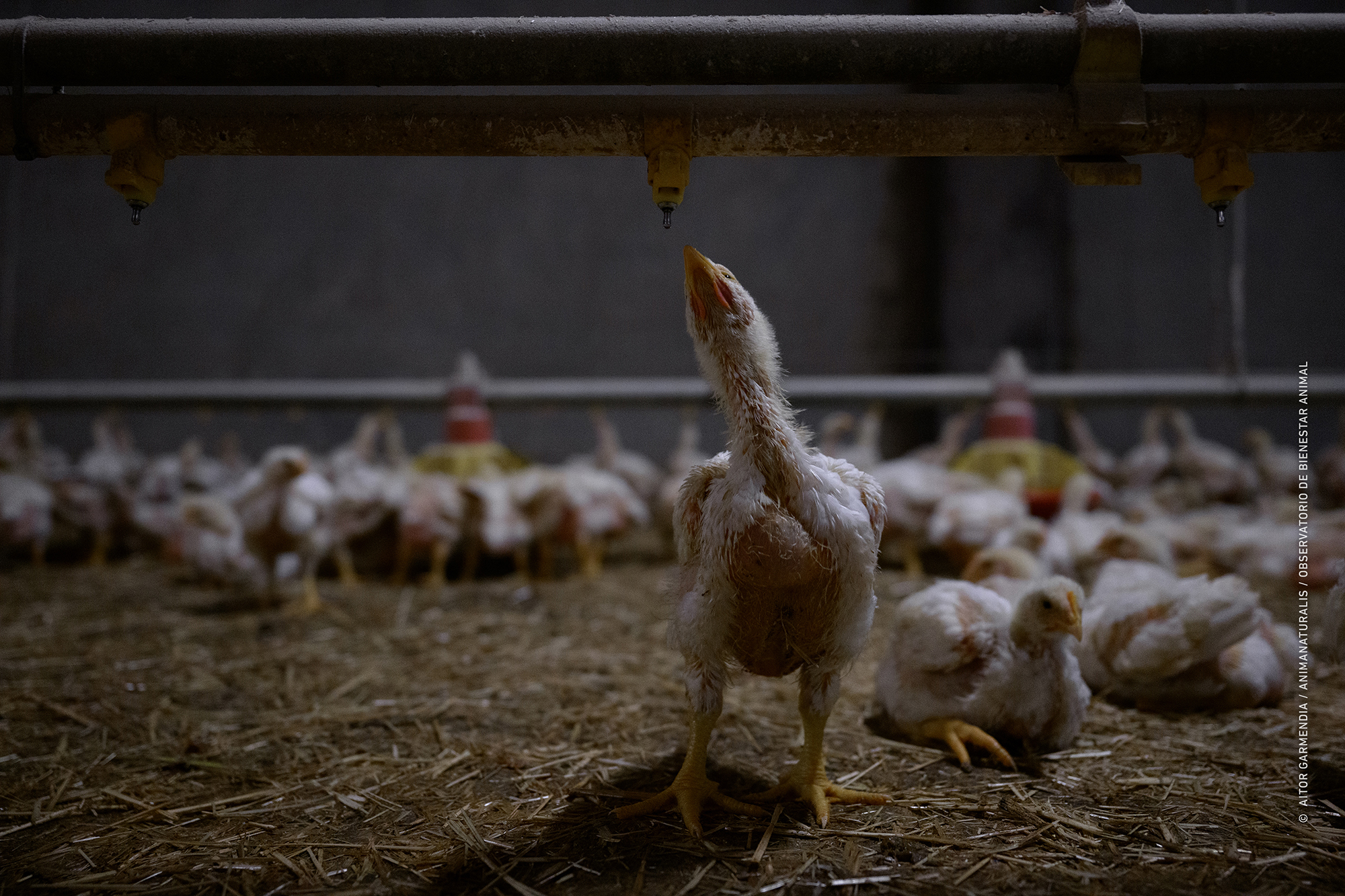
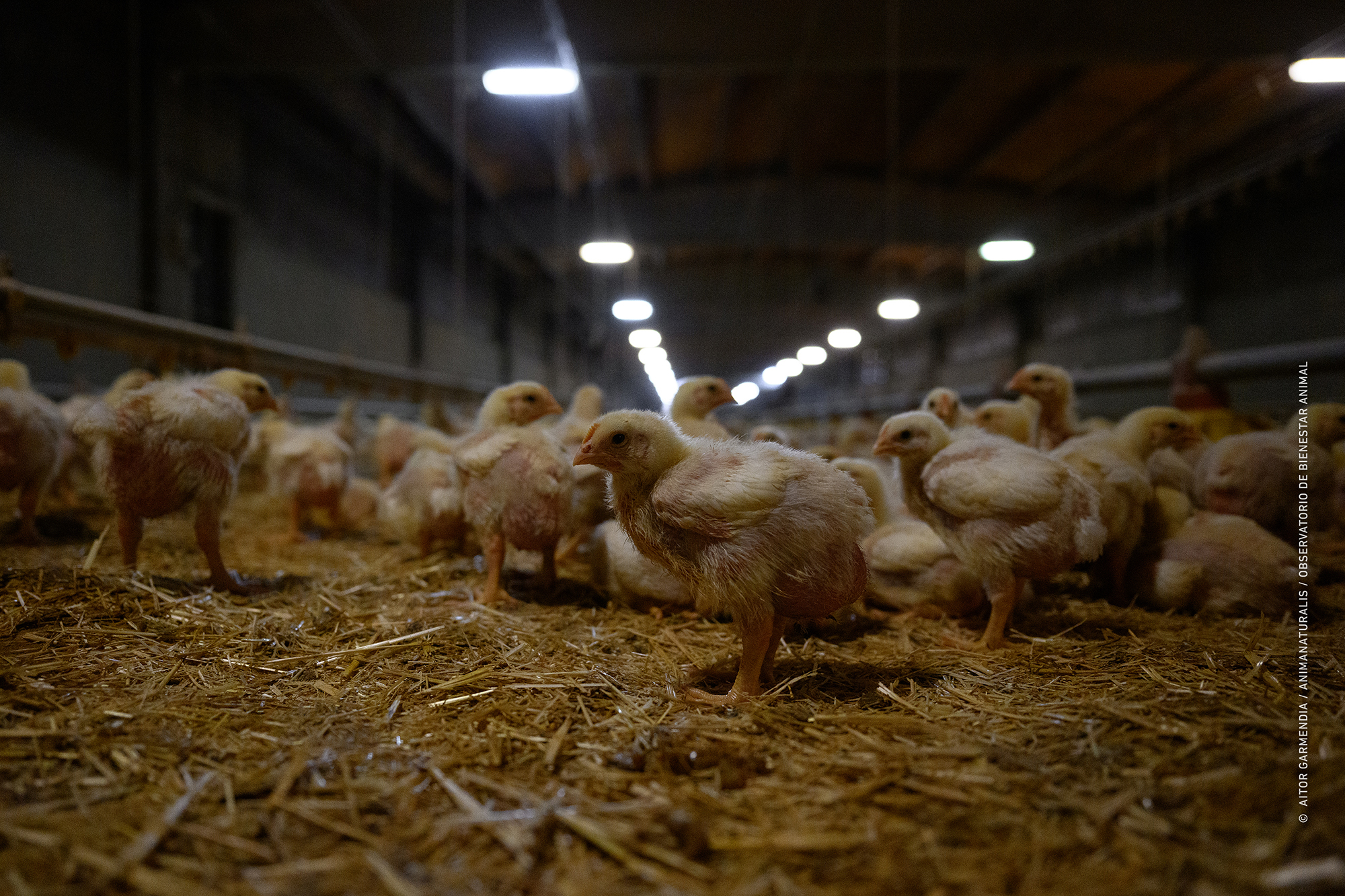
Your signature can change what happens in those warehouses
The images by Aitor Garmendia show what happens on the farms that supply 80% of the Spanish market. Animals whose bodies collapse before reaching six weeks of life, in warehouses where the floor —and the air— are saturated with excrement. Not in a distant country. Just a few hours from where you are reading these lines.
You can make that change happen. Signing AnimaNaturalis' campaign against factory farms is a concrete act of pressure on industry and institutions: an unequivocal signal that Spanish society does not accept that suffering should remain the standard. Every signature adds to the more than 230,000 voices that have already spoken out before the EU. Yours matters.
"The industry has the capacity to lead this transformation," argues Gascón. "What it needs is to know that society demands it." And in those warehouses in Catalonia and Castilla-La Mancha, hundreds of millions of individuals are waiting for that to be the case.
Sign AnimaNaturalis' campaign against factory farms now at Granjas.org and demand that the Spanish poultry industry adopts the European Chicken Commitment. Your signature is the first step towards a food system that is not built on suffering.
We need your support
AnimaNaturalis exists because billions of animals suffer at human hands. Because they animals need solutions. Because they deserve someone to speak up for them. Because animals need change. Because at AnimaNaturalis we want to build a fairer world for everyone.
The donations of our supporters are the main source of our funds.


